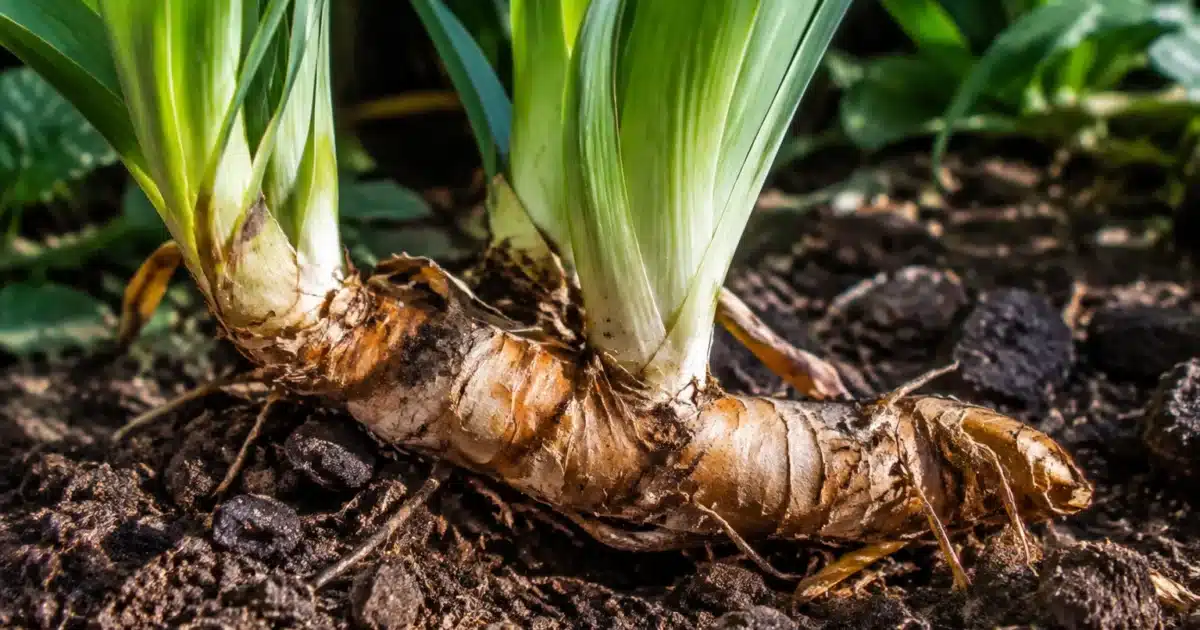
Your irises haven’t flowered for two seasons? The culprit is often hiding underground, buried by your well-intentioned caution. The bearded iris rhizome isn’t a bulb: it needs light to produce its flowering stem, and burying it completely is enough to ruin the entire next blooming season.
The iris rhizome: this part that must stay visible
Unlike tulips or daffodils, the bearded iris doesn’t grow from a bulb hidden beneath the soil. It develops from a rhizome, a fleshy underground stem that stores the plant’s reserves. This rhizome must remain flush with the surface, meaning half-visible, with only the roots embedded in the soil.
Many gardeners, accustomed to planting bulbs or standard perennials, reproduce the same instinct with irises and bury them completely. This is where everything goes wrong: this very common mistake explains most of the failed blooms observed in spring.
Why burying the rhizome prevents flowering
The rhizome needs direct sun exposure to accumulate heat. This accumulated warmth triggers the formation of the flowering stem the following year. Once covered with soil, it remains permanently damp and cold, blocking this natural mechanism.
The second danger is even more radical: a rhizome buried in water-retaining soil rots very quickly. Rot sets in within weeks, especially if planting took place in a waterlogged depression or poorly drained soil. Once the rhizome is affected, the entire clump can disappear, foliage and all.
The classic mistake to avoid
Planting the rhizome like an onion, tip pointing down and completely covered with soil. Result: no flowering the first year, then silent rot that kills the clump in two seasons without you understanding why.
The right planting technique: flush rhizome with back facing sun
Never kill
another plant.
Take a photo: the app names the species, spots the problem and tells you exactly what to do.
To plant or replant a bearded iris correctly, dig a shallow hole and form a small mound of soil in its center. The rhizome sits astride this mound, back exposed to the sun, while the roots spread on either side into the soil.
Then lightly cover the roots with soil, leaving the top of the rhizome exposed to air, like a duck’s back breaking the surface. The fan of leaves should always be oriented away from the sun, so the rhizome captures maximum heat throughout the day. Moderate watering after planting is sufficient while roots establish themselves.
Tap to scan your plant
This feature requires the Plantalya app. Scan any plant instantly with your camera!
Scan Your Plant — Download Free AppDivide clumps every 3-4 years to restart flowering
Even well-planted irises eventually exhaust themselves. After three or four years, the clump becomes too dense, rhizomes pile up and compete with each other for light and nutrients. Flowering gradually decreases, then stops almost completely if nothing is done.
Regular division of clumps is the only gesture that durably relaunches flowering stem production. It’s also the opportunity to eliminate tired old rhizomes and multiply your flower beds for free.
When to divide: July-August after flowering
The ideal period is right after flowering, between July and August. The plant has then replenished its reserves and has several weeks of warmth to heal and take root before winter. Dividing too late in autumn exposes young plants to frost before they’ve had time to establish.
Never kill
another plant.
Take a photo: the app names the species, spots the problem and tells you exactly what to do.
Preparation steps before replanting
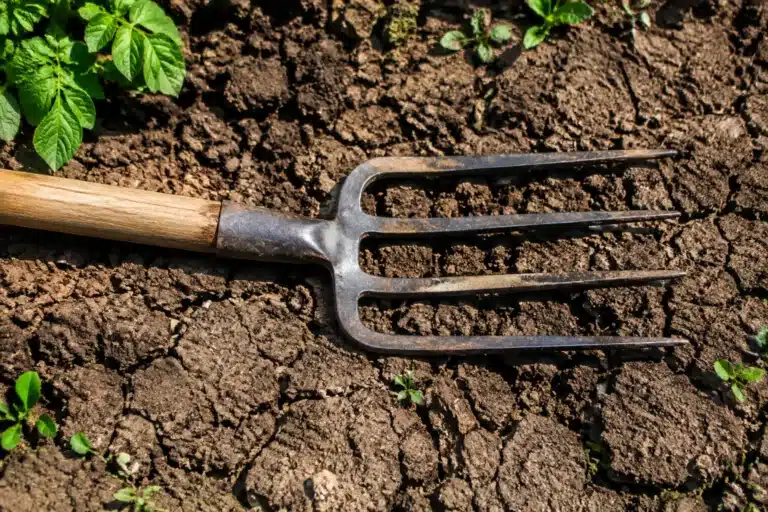
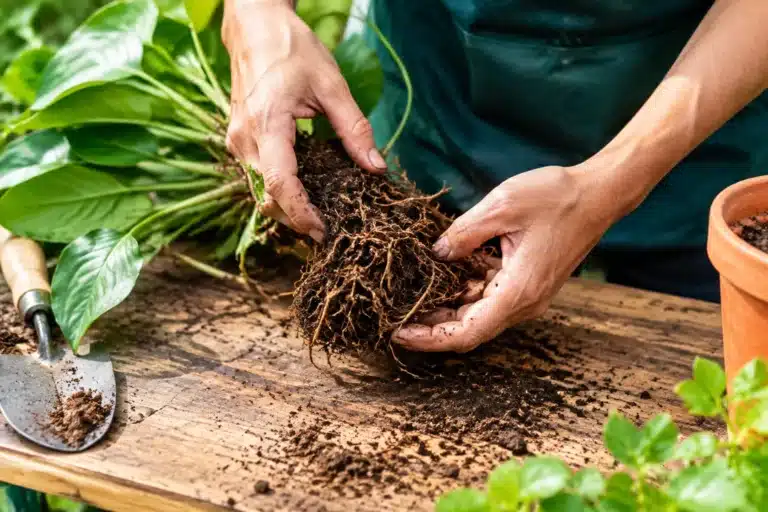
Dig up the entire clump with a spading fork, then separate the rhizomes by hand or with a clean knife, keeping only young, firm segments with a fan of leaves. Discard old woody rhizomes without foliage. It’s advised to trim the leaf fan to about 6 inches to limit evaporation while new roots form.
| Step | Action |
|---|---|
| 1. Dig up | Remove the entire clump with a spading fork |
| 2. Divide | Separate young rhizomes, discard old ones |
| 3. Trim | Shorten foliage to about 6 inches |
| 4. Replant | Rhizome flush with surface, on a mound, back facing sun |
Ideal conditions: well-drained soil and full sun
The bearded iris doesn’t tolerate standing water well. Well-drained soil, even poor or gravelly, suits it far better than heavy clay soil that retains moisture around the rhizome. If the terrain is compacted, adding sand or gravel to the bottom of the planting hole noticeably improves drainage.
Exposure should be as sunny as possible, ideally facing south, with a minimum of six hours of direct sun daily. Too shady a location produces abundant foliage but very few flowers. A light application of low-nitrogen fertilizer in spring, before bud formation, also encourages more generous blooming without weakening the rhizome against disease.