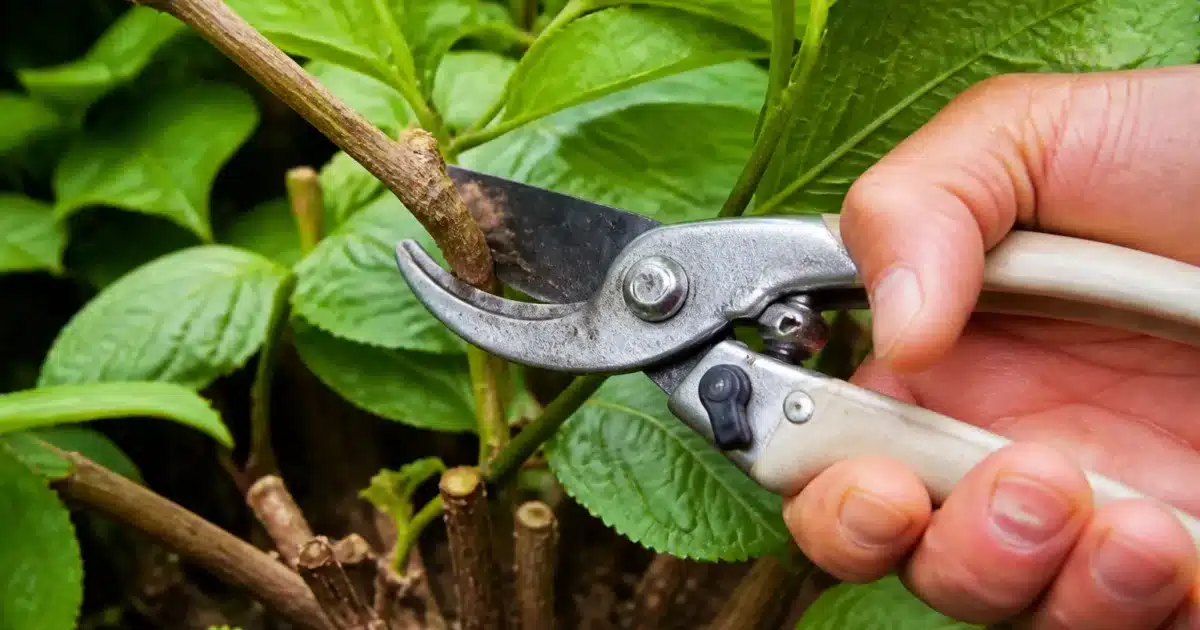
You prune your hydrangea in spring and end up with a vigorous bush full of leaves but not a single flower. This is one of the most frustrating gardening mistakes, and it comes down to one reason: you’ve cut off the wrong flower buds. Understanding the difference between old wood and new wood changes everything for your flowering.
The fatal mistake: pruning old wood at the wrong time
The majority of classic hydrangeas (mophead and lacecap varieties) bear their flower buds on old wood, meaning branches formed in the previous year. These buds develop in autumn and rest dormant through winter, ready to bloom in spring and summer. If you prune these branches in spring or before the first frosts, you’re literally eliminating the flowers developing underneath.
The classic mistake happens in March-April, when gardeners think they’re doing the right thing by cutting back their hydrangeas. They reduce the stems to 30 or 50 centimetres high, convinced they’re rejuvenating the plant, without realising they’ve eliminated the entire flowering planned for that year. The result: vigorous new shoots but no flowers.
Old wood or new wood: what’s the difference for your hydrangeas?
How to recognise old wood that carries flowers
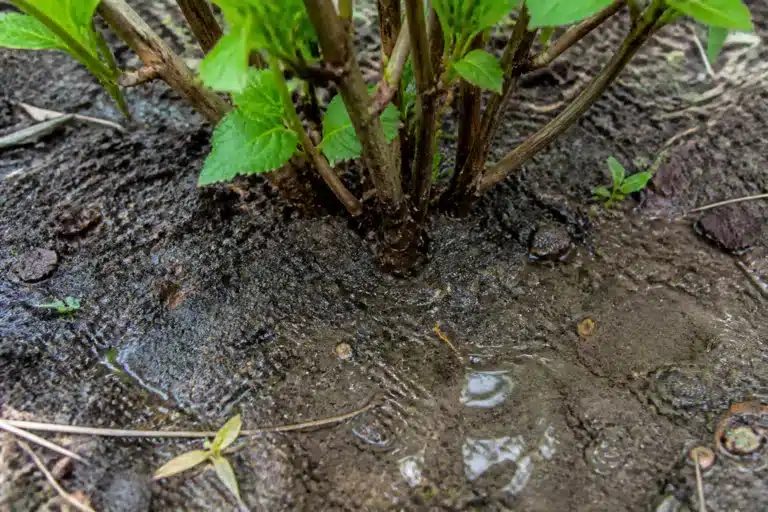
Old wood is wood that was already a year old or more. You can recognise it by eye: it’s thicker, brown or greyish in colour, sometimes slightly peeling. In winter and early spring, look carefully at the tips of the stems: you’ll see small flower buds, usually with a slightly rounder, more bulbous shape than leaf buds. These little swellings are your future flowers.
New wood, by contrast, is thinner, smoother and often a lighter shade, almost greenish-brown. It grows each spring and produces mostly foliage. This wood doesn’t carry flower buds on mophead and lacecap hydrangeas (that’s their key characteristic).
Hydrangeas that flower on old wood versus new wood
Not all hydrangeas work the same way. This is where the confusion lies.
Hydrangeas on old wood (rule: prune after flowering in autumn or winter): mophead and lacecap varieties like Hydrangea macrophylla and H. serrata, and some repeat-flowering varieties produce their flowers on old wood. For these varieties, pruning should happen just after flowering, in September-October, before the flower buds form. This is the critical timing.
Hydrangeas on new wood (rule: prune in spring without risk): panicle hydrangeas (Hydrangea paniculata, recognisable by their pointed panicle flowers) and smooth hydrangeas (Hydrangea arborescens) flower on the wood they produce in spring. For these, pruning in February-March causes no damage, as the new branches will form flower buds immediately.
When and where to prune depending on hydrangea type
Pruning mophead and lacecap hydrangeas (old wood)
For these varieties, pruning must follow a strict schedule. The best time is late August to October, just after flowering begins to fade. At this point, you can remove the faded flowers by cutting the stems back lightly (10 to 20 centimetres), leaving the old wood that carries the future flower buds intact.
Never kill
another plant.
Take a photo: the app names the species, spots the problem and tells you exactly what to do.
Don’t cut below the visible flower buds at the base of each stem. If you see these small swellings, that’s where you must stop. A common mistake is to cut back hard in autumn-winter “for next year”: it’s unnecessary and risky for frost damage. Light pruning is enough.
If a late frost destroys the flower buds in spring, you won’t have flowers that year, but the plant isn’t damaged by the frost itself. It’s an unavoidable climate risk for these varieties.
Pruning panicle and smooth hydrangeas (new wood)
These hydrangeas demand an opposite approach. You can prune them without worry in February or March, before they start growing. More or less severe pruning is possible depending on your preferred shape: you can cut back to 50 centimetres if you prefer a compact shrub, or prune lightly if you prefer a more natural outline.
Tap to scan your plant
This feature requires the Plantalya app. Scan any plant instantly with your camera!
Scan Your Plant — Download Free AppThe panicle hydrangea tolerates hard pruning better than mophead varieties. It will regrow quickly and form new flower buds on the new growth. This makes it easier to manage for beginners.
Avoiding common pruning mistakes
Mistake number one is still pruning mophead and lacecap hydrangeas in spring. Many gardeners think it’s the right time because it’s when the plant “wakes up”. It’s wrong. At this stage, the flower buds are already present and ready to open. Cutting them back destroys the flowering before it begins.
Mistake number two is confusing the varieties. If you have a mix of different hydrangeas, label them to avoid getting your pruning schedule mixed up. Simply asking the supplier when you buy (“old wood or new wood?”) will save years of frustration.
Mistake number three is pruning during stress (drought, severe frost). A plant weakened by difficult climate conditions won’t quickly regain vigour after hard pruning. Prefer light pruning until conditions return to normal.
Never kill
another plant.
Take a photo: the app names the species, spots the problem and tells you exactly what to do.
| Hydrangea type | Flowers on | When to prune | Pruning intensity |
|---|---|---|---|
| Mophead and lacecap | Old wood | September-October (after flowering) | Light (10-20 cm) |
| Climbing hydrangea | Old wood | Immediately after flowering in summer | Light (cut flowered shoots) |
| Panicle hydrangea | New wood | Early spring (before active growth) | Moderate to hard |
| Smooth hydrangea | New wood | Early spring (before active growth) | Moderate to hard |
The mixed-pruning trap
If you prune a mophead or lacecap hydrangea in spring, removing only dead wood and dead branches (which seems harmless), you’re also removing the flower buds attached to them. Even a “light maintenance prune” can reduce flowering. For old-wood types, simply remove the faded flowers and leave everything else alone until autumn. The Royal Horticultural Society (RHS) recommends leaving old flowerheads in place over winter, as they protect the developing buds below from frost.
Understanding the difference between old wood and new wood transforms your relationship with hydrangeas. Once you’ve identified the variety you own and respect its specific schedule, flowers return year after year, without disappointment. It’s a matter of observation and discipline, not gardening talent.