

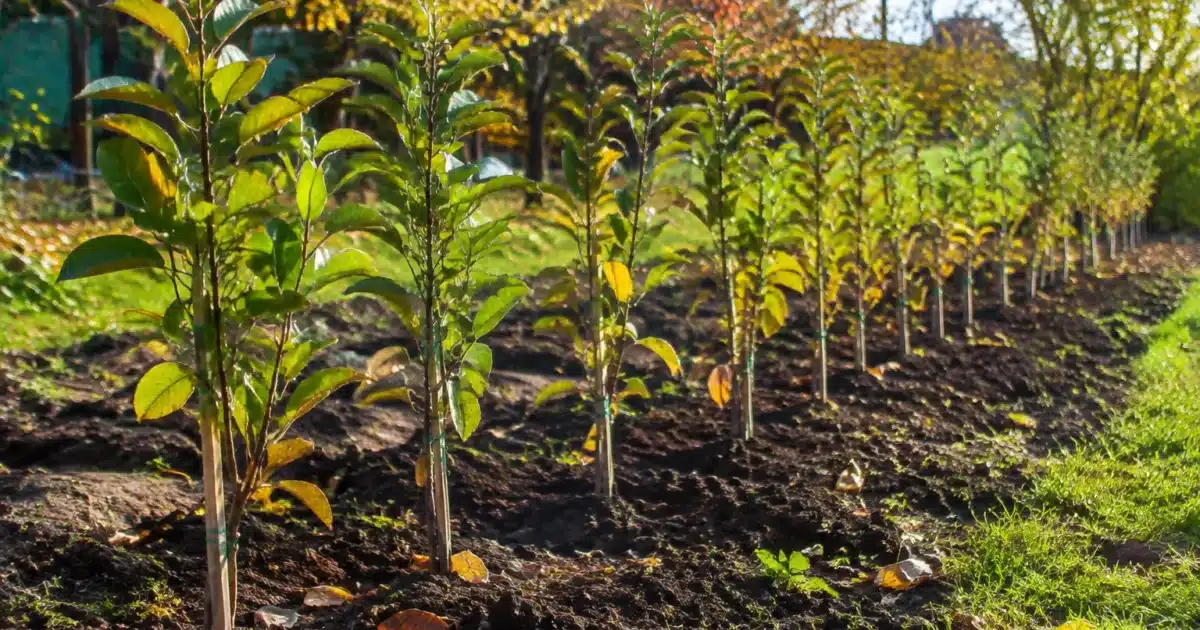
The temperature is dropping a bit, but beneath your feet, the soil still holds onto its summer warmth. This is precisely the moment seasoned gardeners are waiting for to plant their fruit trees. Warm soil means faster establishment, roots that take hold before the hard freezes, and a much hardier tree come spring.
Four fruit trees benefit particularly from this window: the apple tree, pear tree, fig tree, and almond tree. All share an ability to capitalize on soil still warm to develop their root system before entering winter dormancy. Here’s why this timing matters so much, and how to plant each one for optimal establishment.
Why Planting Fruit Trees When Soil Is Still Warm Promotes Their Establishment
Soil that has stored the summer’s heat remains biologically active far longer than the surrounding air temperature might suggest, a principle that also applies to perennials to plant now to bloom in spring. Roots continue to grow as long as soil temperature stays above a few degrees, even as leaves begin to turn yellow. By taking advantage of this period for late-summer planting, the tree undertakes discreet yet decisive underground work.
This phenomenon explains why autumn remains the favored season for nurseries to sell bare-root fruit trees. The tree doesn’t yet have to manage the stress of aerial growth; all its energy goes toward rooting. Result: come spring, it starts with a root system already in place, capable of seeking water and nutrients without suffering the classic shock of spring planting amid active growth.
The 4 Fruit Tree Varieties to Prioritize for Late-Summer Planting
Hardy Apple and Pear Trees: Reliable Classics
Hardy apple trees like Reinette Grise du Canada or Reine des Reinettes do very well with autumn planting. Their root system, fairly well-developed from the first year, takes full advantage of weeks of warm soil to anchor firmly. Sturdy pear trees, notably old-fashioned varieties like Curé or Conférence, follow the same logic: they hate late spring transplanting, but love an autumn installation.
These two fruit trees accept both bare-root planting and container-grown trees equally well, which simplifies life for the impatient gardener. Simply verify that the graft union remains clearly visible above soil level after planting, a detail often overlooked that nonetheless conditions the tree’s long-term health.
Fig Tree: Champion of Heat and Frugality
The fig tree is arguably the most opportunistic of the four. Native to Mediterranean regions, it needs warmth to root well, making it an ideal candidate for planting when soil still holds summer’s heat. Its drought resistance once established is remarkable, provided the first weeks following planting benefit from regular watering.
Another advantage: the fig tree tolerates poor, rocky soils well, making it a smart choice for gardens with difficult terrain. Its root vigor, if properly initiated before winter, allows it thereafter to get through dry summers without weakening.
Never kill
another plant.
Take a photo: the app names the species, spots the problem and tells you exactly what to do.
Almond Tree and Resilient Mediterranean Shrubs
The almond tree shares with the fig tree a taste for Mediterranean varieties that are not water-hungry. However, it dreads stagnant winter moisture, hence the value of properly draining the planting hole. Once well-rooted before freezing, it flowers late in winter, often the first of the entire orchard.
If you’re looking to create a self-sufficient orchard, combining these four species allows you to stagger harvests and limit risks from climate variability (a hardy fruit tree often compensates for another’s temporary weakness), much like shrubs that hold fruit and color into late season.
The Mistake That Compromises Establishment
Planting a fruit tree in waterlogged soil or compacting the earth excessively around the roots prevents air circulation. Result: roots suffocate instead of establishing, even if your timing was right.
Tap to scan your plant
This feature requires the Plantalya app. Scan any plant instantly with your camera!
How to Properly Plant These Fruit Trees for Optimal Rooting Before Winter
Hole Preparation and Location Selection
Hole preparation determines much of your success. Aim for a volume at least twice that of the root ball or root system, and loosen the walls well to avoid the “pot effect” that would trap roots. Adding well-decomposed compost to the bottom of the hole nourishes without burning young roots.
The location must account for local climate: a spot sheltered from prevailing winds for fig and almond trees, more open exposure for apple and pear trees that better tolerate cold. Also consider the mature tree’s final spacing to avoid future root competition.
Mulching and Watering: The Gestures That Matter
Once the tree is in place, mulching plays a dual role: it conserves soil moisture and limits temperature swings that could slow rooting. A layer of 5 to 8 centimeters of organic mulch (shredded bark, straw, fallen leaves) is plenty, taking care not to pack it directly against the trunk.
Never kill
another plant.
Take a photo: the app names the species, spots the problem and tells you exactly what to do.
Deep watering immediately after planting eliminates air pockets around roots and promotes optimal contact with soil. A second watering a week later, then monitoring based on rainfall, supports the tree’s optimal establishment during the weeks before its entry into dormancy.
| Fruit Tree | Recommended Soil | Point of Care |
|---|---|---|
| Apple Tree | Moist, deep soil | Graft union above ground |
| Pear Tree | Well-drained, slightly chalky soil | Avoid windy areas |
| Fig Tree | Poor soil, rocky accepted | Regular watering first weeks |
| Almond Tree | Draining, dry winter soil | Avoid standing water |
Practical Timeline and Tips for Successful Autumn Planting
The ideal window generally falls between mid-September and late October, depending on your region. The goal is to leave several weeks of still-warm soil before the first hard freezes, while avoiding late heat waves that would stress a newly planted young tree.
Within the annual cycle of the tree, this autumn planting fits into straightforward logic: less foliage to feed means more energy available for roots. A young fruit tree planted at this time often starts its first real growing season with a clear advantage over one planted the following spring, which more than justifies not waiting for warm weather to get started.


