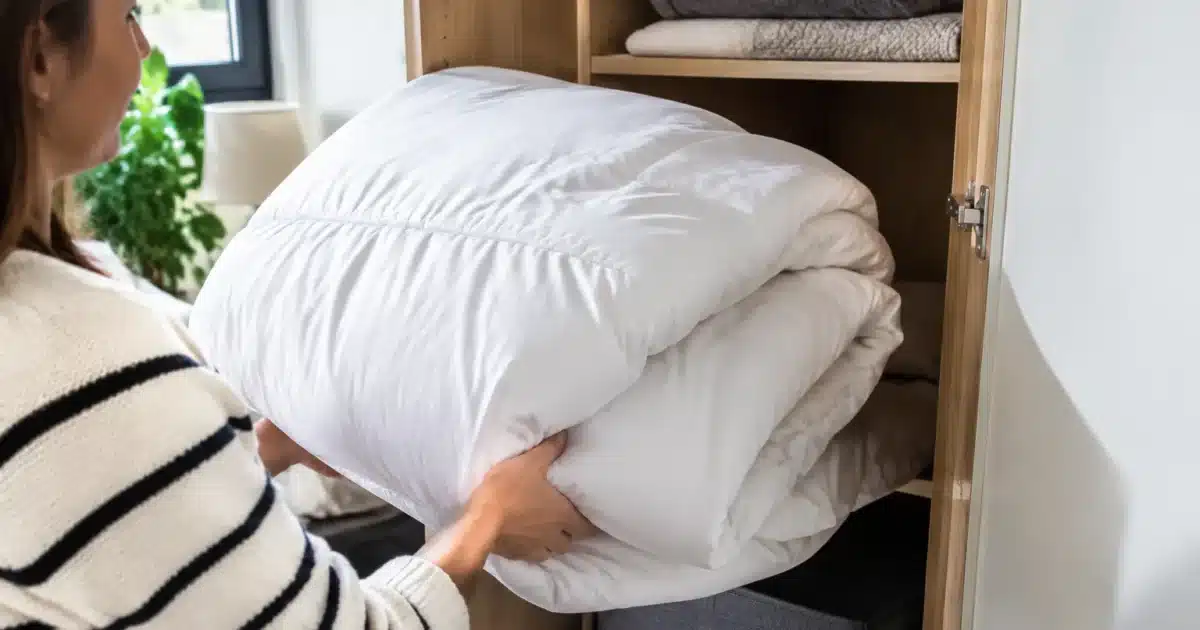
You open the closet, grab your winter comforter, and are about to place it directly on the bed. Bad idea. After several months locked away in a bag or on a shelf, it has had plenty of time to accumulate dust, dust mites, and sometimes a little residual humidity. Putting it straight back on your bedding means reintroducing all of that directly under your nose for eight hours every night.
The rule is simple: before using it again, a comforter that has spent the summer in storage needs to be inspected, aired out or washed depending on its condition, then dried completely—much like those summer items to clean before storing them. Three steps, a few minutes or a few hours depending on the material, but they make all the difference for your bedding hygiene.
Why you should never put a comforter that’s been stored all summer directly back on your bed
Even when neatly folded in a closed storage bag, a comforter is never completely protected. Textile fibers naturally retain ambient humidity, especially if it has been stored in a poorly ventilated closet or basement. This humidity, which is actually among the mistakes that let humidity into your home in autumn, creates favorable conditions for dust mite development—those tiny invisible organisms that feed on dead skin cells and thrive in heat and darkness.
Add to this the dust, which seeps into even the best-sealed bags over the course of weeks. Result: a comforter that appears clean on the surface can actually harbor quite an unpleasant ecosystem. People with allergies or asthma will notice this quickly, experiencing sneezing or breathing discomfort from the very first nights.
The 3 essential steps before taking your winter comforter back out
Inspect and shake out the comforter
Always start by taking the comforter outside, or at minimum near an open window, and shake it firmly. This basic gesture already releases a good deal of accumulated dust and restores volume to the fibers, particularly for down or feather models that tend to compress during storage. Take the opportunity to check its overall condition: seams, suspicious odors, any signs of moisture.
Wash or air out depending on condition and material
If the comforter comes from dry, clean storage, a few hours of airing out is usually sufficient. On the other hand, if it has been stored for more than three months, if you detect a stale smell, or if it hasn’t been washed since the previous season, a machine wash is necessary. This is the time to check the care label before you begin.
Dry thoroughly to eliminate all moisture
Drying is the most often overlooked step, yet it’s the most decisive. A comforter that remains slightly damp in the core of the filling becomes a breeding ground for mold and dust mites within just a few days. Prioritize complete drying, whether in the dryer or air drying, making sure no area remains compact or cold to the touch.
Never kill
another plant.
Take a photo: the app names the species, spots the problem and tells you exactly what to do.
The mistake that damages loft
Storing a down or feather comforter compressed in a vacuum bag for months permanently crushes the feathers. Once removed, it struggles to regain its original volume even after drying. Always prefer a breathable storage bag without excessive compression.
How to wash your comforter based on its material
Tap to scan your plant
This feature requires the Plantalya app. Scan any plant instantly with your camera!
Scan Your Plant — Download Free AppNot all comforters should be treated the same way, and making a mistake can permanently damage the filling. For a synthetic comforter, a standard washing machine works in the vast majority of cases, with a gentle cycle and a washing temperature of 30 to 40°C maximum. Synthetic fibers tolerate water well and dry relatively quickly.
A down comforter or a feather comforter requires more care. Always verify that your machine can handle the volume (often starting from 8 kg for a queen-size comforter), use mild detergent without fabric softener, which weighs down the feathers, and reduce the spin cycle to a maximum of 600 rpm to avoid breaking the feathers inside the fabric.
| Material | Temperature | Recommended drying |
|---|---|---|
| Synthetic | 30 to 40°C | Dryer or air dry |
| Down | 30°C | Low heat dryer with tennis balls |
| Feather | 30°C | Air dry, turned regularly |
For drying down comforters, tossing two or three clean tennis balls in the dryer prevents feathers from clumping into balls and allows you to restore even loft. Without a dryer, air drying works just as well, provided you lay the comforter flat and flip it several times so moisture evaporates evenly, including in the center of the filling.
Never kill
another plant.
Take a photo: the app names the species, spots the problem and tells you exactly what to do.
Good practices for storing your comforter next summer
To avoid reliving this scenario next year, a few simple habits are all it takes, much like the checks to make before turning the heating back on. Always wash the comforter before storing it, never after direct use, because heat trapped in slightly damp fabric promotes mold during storage months. Then let it rest a full day in the open air before folding it up.
Choose a breathable fabric storage bag rather than a hermetically sealed plastic bag, which prevents any air circulation and encourages condensation. You might slip in a moisture-absorbing sachet if your closet isn’t particularly dry. And remember to take the comforter out once during the season for a simple airing of a few hours, just to break the humidity cycle before it takes hold.
Finally, don’t forget the comforter cover itself: wash it before putting the comforter back in place, even if it seemed clean when stored. Truly healthy bedding starts with completely clean linens from top to bottom, not just the comforter you slip inside.