The days are getting shorter, the fresh evening air is becoming scarce, and soon you’ll only open your windows for a handful of minutes each day. This turning point is the perfect moment to act: once the windows are closed for the cold season, everything lingering in your home—dust, allergens, mold—will circulate in a closed loop for months. Here are the 7 areas to address now, before the air becomes trapped.
Why clean these areas before living with closed windows?
While windows remain open, the air refreshes itself effortlessly. As soon as heating starts and openings close, indoor air quality depends solely on what you’ve already cleaned. A clogged ventilation system, curtains laden with dust mites, or an oven that smokes with every use become continuous sources of particles breathed in a loop.
This deep clean is nothing like a traditional spring cleaning, where you open windows wide for hours. Here, the objective is reversed: preparing an interior that will stay healthy without abundant natural ventilation. Seven key areas concentrate most of the risk, and addressing them now genuinely changes the quality of air you’ll breathe throughout winter.
1. Ventilation systems and exhaust fans
This is the absolute priority. An exhaust fan is supposed to continuously renew the air, but if the extraction vents and air grilles are clogged with dust, it runs empty while air stagnates. Dust each vent with a damp cloth or a vacuum with a soft brush attachment, and verify that nothing obstructs the air inlets located at the top of the windows.
The exhaust fan filter deserves a systematic check at this time of year: a saturated filter reduces airflow by half or more. If it’s washable, a simple rinse will do. If it’s disposable and grayish, replace it before winter arrives.
2. Radiators and baseboard heaters
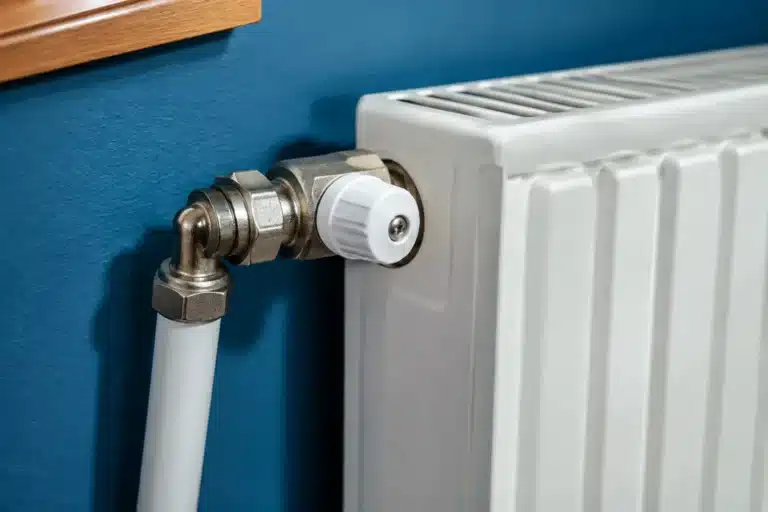
Before the first burst of heating, dust accumulated on radiators during summer literally burns off and spreads an acrid characteristic smell, plus fine particles throughout the room. Vacuum between the fins with a narrow nozzle, then wipe the baseboards with a slightly damp microfiber cloth—often overlooked even though they trap enormous amounts of dust at floor level.
For water radiators, a quick check of the bleeder valves isn’t a luxury: a poorly bled radiator heats less efficiently and tempts you to unnecessarily raise the room temperature (see also these 5 checks to perform before turning on the heating).
3. Windows, sills, and window frame seals
Windows clean easily enough, but it’s the seals that become problematic once windows are closed for months, which is why it’s worth doing this paper test to detect cold air leaking through your windows. Condensation moisture settles in these areas, and mold finds perfect conditions in the darkness and confinement. A mixture of water and white vinegar applied with an old toothbrush eliminates black marks before they set in.
Interior sills also accumulate a fine layer of dust mixed with outdoor residue. A thorough cleaning now prevents sealing this dirt under months of continuous closure.
Never kill
another plant.
Take a photo: the app names the species, spots the problem and tells you exactly what to do.
4. The kitchen: range hood, oven, and refrigerator
The range hood captures cooking grease, but its filter eventually becomes saturated and releases odors instead of trapping them. A soak in hot water with degreaser, once a month in winter, keeps its efficiency intact. The oven also deserves deep cleaning before the season of slow-cooked meals: carbonized residue at the bottom releases smoke with every high-temperature cooking session.
The refrigerator, often neglected, completes this list. The rear grille accumulates dust that reduces energy efficiency, and the interior deserves a white vinegar cleaning to start fresh before winter meals.
5. The bathroom: seals, fixtures, and exhaust fan
The bathroom concentrates humidity and heat, an ideal cocktail for mold as soon as ventilation weakens. Bathtub and shower seals should be cleaned just like window seals, with an anti-mold product if stains are already present. Fixtures also deserve complete descaling: accumulated limescale eventually blocks flow and promotes water stagnation around seals.
Tap to scan your plant
This feature requires the Plantalya app. Scan any plant instantly with your camera!
Scan Your Plant — Download Free AppThe bathroom exhaust fan, often separate from the rest of the home’s system, should be checked independently. A clogged grille here, and all the shower moisture gets trapped in the next room.
The common mistake with moldy seals
Many simply use bleach to whiten blackened seals. The problem: bleach discolors the surface but doesn’t kill mold roots embedded in the porous silicone. A specific anti-mold product, left to sit for several minutes, delivers lasting results where bleach offers only a cosmetic effect lasting a few weeks.
6. Textiles and fabrics: curtains, sofas, and bedding
Curtains filter the air entering through windows all summer and end up saturated with dust and pollen. A machine wash, or vacuuming for non-washable models, eliminates this reserve of allergens before it remains trapped in the room all winter. Fabric sofas follow the same logic: removable washable covers, cushions vacuumed with an upholstery attachment, possibly steam treatment for fibers that harbor dust mites deep within.
Never kill
another plant.
Take a photo: the app names the species, spots the problem and tells you exactly what to do.
Bedding deserves special attention since you spend a third of your day there, and if your comforter is fresh from the storage closet, it’s worth knowing why you shouldn’t put it directly back on the bed. Sheets, duvet covers, and pillowcases should be washed at 60 degrees or higher to neutralize dust mites, and your anti-mite mattress protector, if you have one, should be changed at this exact point in the season.
7. Floors and carpets
Floors collect everything that falls from the six areas above: radiator dust, curtain fibers, kitchen residue. A complete cleaning at this time of year—tile, wood, or vinyl—starts fresh before closed windows slow the natural drying of humidity.
Carpets, meanwhile, deserve a thorough vacuum on both sides, or even beating outside if they’re portable. They’re veritable reservoirs of dust mites and pollen accumulated all summer, and a dry or steam clean in depth, once per season, significantly reduces allergens that will circulate in the confined winter air.
A ritual to repeat with every seasonal change
This deep autumn clean isn’t a disguised spring cleaning, but targeted preparation for months of living in confined air. Addressing these seven areas now, before the first heating kicks in, prevents sealing dust and humidity behind windows that won’t reopen for several months.