Summer is coming to an end and your fan is about to spend months in the closet. But there’s one step that almost always gets skipped: cleaning. The result? Come spring, you turn on a device covered in dust, sometimes noisy, sometimes completely seized up.
The good news is that thorough cleaning takes no more than five minutes and almost never requires disassembly. A pillowcase, some white vinegar, and soapy water are all you need to remove the dust accumulated on the blades and grille before your device goes into hibernation.
Why you should clean your fan before storing it for winter
Throughout the warm season, your fan continuously circulates air and picks up dust mites, hair, and various particles along the way. This dust settles on the blades and gradually forms a greasy coating, especially in kitchens or poorly ventilated rooms. If stored as is, the unit will keep this layer for several months in a closed, often humid environment.
The real problem arrives when spring rolls around. Dried dust hardens around the shaft and bearings, which can cause a seized motor or difficult startup. You’ll notice unusual noises, grinding sounds, or sometimes even the motor straining without the blades turning normally. Cleaning before storage prevents this buildup and protects the mechanism.
The pillowcase and white vinegar method: express cleaning without disassembly
This technique has become the gold standard because it lets you clean without removing the grille, while keeping dust from scattering everywhere around the room. It works equally well for a tabletop fan or a larger pedestal fan.
Step by step: how to do it in 5 minutes
First, unplug the device—that’s the cardinal safety rule. Then slide a pillowcase around the front grille, wrapping it completely to trap the dust that’s about to come loose.
Gently rotate the blades through the fabric, pressing lightly to scrub away stubborn dust. The pillowcase catches most of the debris without it spreading throughout the room. Remove it and shake it outside.
To finish, soak a microfiber cloth in a mixture of equal parts water and white vinegar, then wipe down the blades and the edge of the grille. Vinegar dissolves the greasy coating that often resists simple dusting and disinfects at the same time. Let it dry completely in the air before storing the device.
When the grille is screwed on: the microfiber alternative
Never kill
another plant.
Take a photo: the app names the species, spots the problem and tells you exactly what to do.
Some models, especially older pedestal fans, have a grille fixed with screws and don’t lend themselves to the pillowcase technique. In these cases, a microfiber cloth lightly dampened with soapy water works very well.
Run the cloth between the grille bars, focusing on areas where dust has accumulated in clumps, usually at the top and sides. Wring out the cloth well to prevent water from seeping toward the motor. Finish with a dry pass to ensure nothing stays damp before storage.
The step you shouldn’t skip before forcing anything
Tap to scan your plant
This feature requires the Plantalya app. Scan any plant instantly with your camera!
Scan Your Plant — Download Free AppIf the blades turn stiffly after several months of inactivity, never force the motor by turning it on directly. Rotate them by hand first, very gently, to loosen the hardened dust around the shaft. A motor forced on a clogged shaft wears out much faster.
Mistakes to avoid so you don’t damage your fan
The first mistake is spraying water directly on the unit, especially near the motor block. Even a small amount can seep in and cause a short circuit or corrode the contacts. A damp cloth that’s been well wrung out is always better than a spray or mist.
Another common error: storing the fan while it’s still damp after cleaning. Trapped moisture in a closed closet encourages mold and odors, plus it traps dust instead of getting rid of it. Complete air drying, even for half a day, makes all the difference.
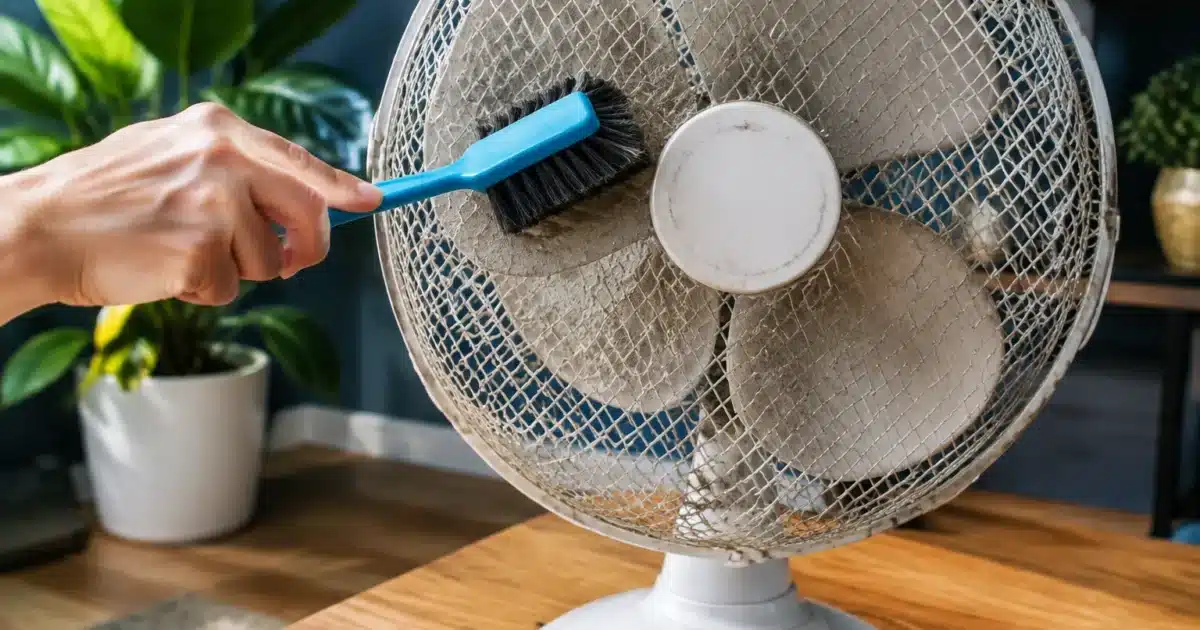
Finally, many people skip internal motor maintenance out of fear of doing it wrong. You don’t need to disassemble it: simply passing dry air, with a soft brush or compressed air duster, over the ventilation grilles is enough to limit dust buildup around components.
Never kill
another plant.
Take a photo: the app names the species, spots the problem and tells you exactly what to do.
How often should you clean a fan (and where to store it afterward)
Regular cleaning every two to three weeks during the usage period already prevents heavy accumulation. This keeps you from arriving at summer’s end with a thick, compacted layer that takes longer to remove. Complete cleaning before storage remains essential nonetheless, even with regular maintenance during the season.
| Situation | Recommended action |
|---|---|
| Daily summer use | Dust every 15 to 20 days |
| Removable grille | Pillowcase plus white vinegar |
| Screwed grille | Microfiber cloth and soapy water |
| Before winter storage | Complete cleaning plus total drying |
For storage, choose a dry location, sheltered from ambient dust and ideally protected in a cover or perforated plastic bag. Avoid damp basements or garage corners exposed to condensation. A clean, properly stored fan will restart in spring without any surprises, ready to work as soon as the first warm days arrive.