You empty a mulch bag costing 8 or 10 dollars while your garden overflows with unused organic matter? Dead leaves, grass clippings, pruned branches—these green waste materials often end up at the landfill when they would make perfect mulch, completely free and often more effective than store-bought products.
Five garden materials can successfully replace store-bought mulch: fallen leaves, grass clippings, chipped branches (or BRF), straw and dried stems, and cardboard combined with pine needles. Each has its own uses, ideal thickness, and precautions. Here’s how to put them to work without spending a penny.
Why Replace Store-Bought Mulch Bags with Your Garden Waste
Commercial mulch is expensive per square meter, especially when covering large vegetable gardens or entire flower beds. The green waste produced each season represents more than enough volume to cover those same areas, without transportation or plastic packaging.
Beyond savings, mulching with your own organic matter nourishes soil health far more sustainably than mineral mulch or imported bark (which also explains why mulching cuts vegetable garden watering needs in half). As these materials break down, they release nutrients, retain moisture, and shelter microbial life that benefits plant roots directly.
The 5 Free Garden Waste Materials That Replace Commercial Mulch
1. Fallen Leaves: The Free Autumn Mulch That Lasts
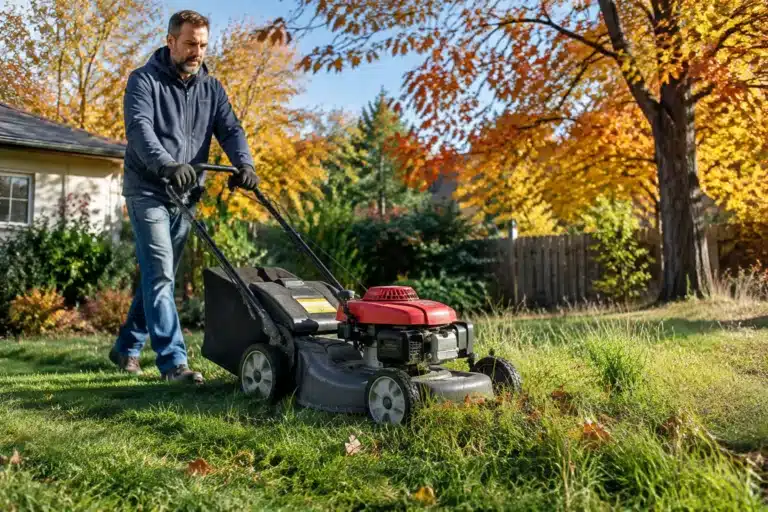
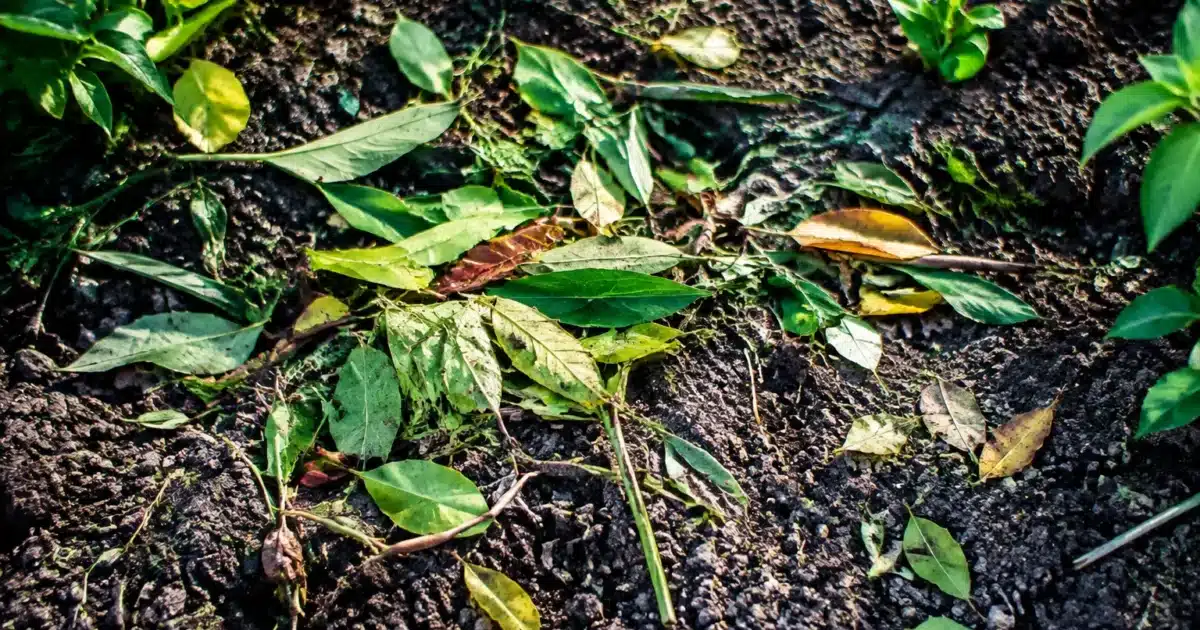
In autumn, fallen leaves are probably the most abundant and easiest resource to use, and there are even reasons to deliberately leave them in your garden rather than bag them up. Spread to about 4 inches thick, they protect the soil from frost and decompose slowly to form rich humus. It’s best to shred leaves with a lawn mower before spreading them: this speeds up their breakdown and prevents them from blowing away in the first gust of wind.
Oak or beech leaves, being tougher, take longer to break down than linden or birch leaves. There’s nothing wrong with mixing them to balance the mulch texture.
2. Grass Clippings: Abundant But Need Careful Handling
Grass clippings are an organic material available almost year-round, but they require more care than leaves. Fresh clippings heat up and ferment if packed in a thick layer: it’s better to let them dry for a day before spreading them in a thin 1- to 2-inch layer, renewed regularly.
Mulching mowers, which leave cut grass directly on the lawn, skip this step entirely and feed the grass continuously. For vegetable gardens, dried clippings placed between rows reduce evaporation and slow down weeds.
3. Wood Chips, BRF, and Shredded Wood: Making Use of Your Trimmings
Every hedge trim or shrub pruning produces branches that, once shredded, become long-lasting mulch. Wood chips and BRF (Bois Raméal Fragmenté) from young branches break down by releasing beneficial fungi for the soil, particularly suited to shrub beds and pathways.
Shredding plant material requires a chipper, which you can rent occasionally or sometimes borrow through a local waste facility or association. The resulting wood chips are laid in a 2- to 3-inch layer, keeping direct contact away from plant stems.
Never kill
another plant.
Take a photo: the app names the species, spots the problem and tells you exactly what to do.
4. Straw and Dried Stems: Perfect for the Vegetable Garden
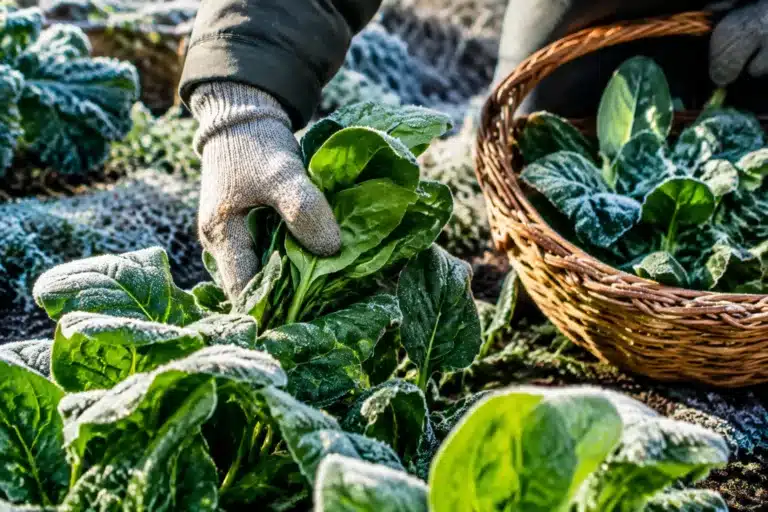
Straw remains a standard for mulching vegetable gardens, especially around tomatoes, zucchini, and strawberries. Light and airy, it allows water through while limiting soil splashes on fruit, which reduces certain fungal diseases. Dried stems from perennials cut at season’s end work similarly once chopped roughly.
5. Cardboard and Pine Needles: Backup Solutions
Brown cardboard, stripped of glues and colored inks, forms an effective barrier against weeds when laid directly on the ground and covered with another mulch—a principle similar to mulch laid before September rains that replaces two months of weeding. Pine needles, slower to decompose, work particularly well for acid-loving plants like hydrangeas or rhododendrons, thanks to their natural acidity.
| Material | Decomposition Speed | Recommended Use |
|---|---|---|
| Fallen leaves | Medium to slow | Flower beds, base of shrubs |
| Grass clippings | Fast | Vegetable garden, between rows |
| Wood chips / BRF | Slow | Hedges, shrubs, pathways |
| Straw | Medium | Vegetable garden (tomatoes, strawberries) |
| Cardboard + pine needles | Slow | Weed-prone areas, acid-loving plants |
Where to Find These Materials Free (Beyond Your Own Garden)
A small yard doesn’t always produce enough green waste to cover all your needs. Neighbors trimming hedges, tree service workers passing through, or your municipality’s parks department often dispose of free wood chips they’d be happy to give away rather than haul off. Your local waste facility sometimes offers free wood chips to homeowners, either on a self-service basis or by request.
Tap to scan your plant
This feature requires the Plantalya app. Scan any plant instantly with your camera!
Scan Your Plant — Download Free AppLocal sawmills and carpentry shops also distribute untreated wood shavings—a godsend for anyone short on organic matter to recycle.
A mulch layer thicker than 4 inches suffocates roots and traps excess moisture, promoting rot and slugs. A thin layer refreshed regularly beats 6 inches applied all at once to cold spring soil.
How to Mulch Properly with Your Waste: Thickness and Precautions
Ideal thickness varies by material: 1 to 2 inches for dried clippings, 3 to 4 inches for leaves or wood chips. Always leave a gap around the plant collar to avoid rot from direct contact with damp mulch.
Never kill
another plant.
Take a photo: the app names the species, spots the problem and tells you exactly what to do.
The soil should be moist before application, ideally after rain or watering, so the mulch retains that moisture rather than drying the surface by drawing water into itself.
Common Mistakes to Avoid for Effective Mulching
The biggest trap is nitrogen depletion: fresh wood chips and BRF, rich in carbon, draw nitrogen from the soil during decomposition, starving nearby plants. Adding compost or crushed horn meal before laying mulch corrects this imbalance.
Another concern: grass clippings from seed-heavy lawns or leaves raked from a diseased tree can introduce unwanted seeds or disease spores into your beds. Running questionable organic matter through the compost pile first reduces this risk when you’re unsure about where your materials came from.