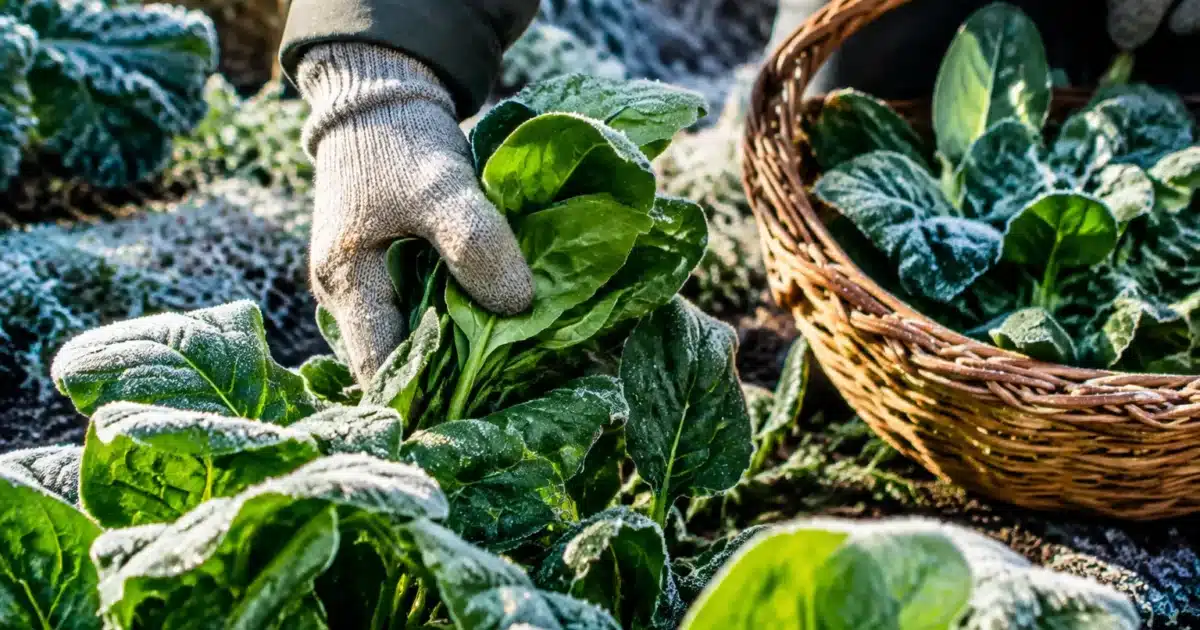
November arrives, tomatoes have thrown in the towel, lettuces freeze on their stems. And yet, a dark, discreet root continues quietly growing underground. Black salsify, often confused with common salsify, is one of those forgotten vegetables that sails through winter without a hitch. It grows while almost everything else in the garden comes to a standstill, and that’s precisely where its entire appeal lies.
This slender, long tuber, a close cousin of salsify and parsnip, is harvested on demand, from the first frosts through the depths of winter. There’s no rush to dig it all up at once: that’s actually the whole point. You plant in spring, practically forget about it all summer, then return to unearth it once the cold has done its work and softened its flavor.
What is this forgotten vegetable that braves the winter garden?
Black salsify (Scorzonera hispanica) belongs to the same family as common salsify, which it’s often confused with. Its root, with black skin and white flesh, resembles a long stick with slight irregularities. Cultivated in French gardens until the middle of the last century, it gradually disappeared from market shelves in favor of vegetables faster to produce and easier to standardize.
It belongs, along with Jerusalem artichoke, Chinese artichoke, and parsnip, to that family of hardy root vegetables that long sustained rural communities through winter. Jerusalem artichoke is harvested similarly, by scratching away earth as needed, while Chinese artichoke, more fragile, requires a bit more care. Black salsify stands out for its near-total frost resistance and its ability to remain in the ground for months without degrading.
Why it grows when almost everything else stops
Black salsify’s frost resistance is no accident. Its root, buried deep in the soil, is protected from temperature fluctuations by several centimeters of earth. Surface frost never reaches its reserves, and cold even tends to improve its flavor by converting some of its starch into sugars.
This mechanism, common to several hardy vegetables like parsnip or Jerusalem artichoke, explains why these plants remain reliable performers in regions with harsh winters. They tolerate both frost and periods of summer drought equally well, making them invaluable allies for a garden that produces year-round with minimal intervention.
Common salsify has light skin, black salsify has dark skin. Their cultivation is nearly identical, but black salsify tolerates heavy soils better and remains in the ground longer without becoming stringy.
Never kill
another plant.
Take a photo: the app names the species, spots the problem and tells you exactly what to do.
How to grow it without spending hours on it
When and where to plant for guaranteed winter harvests
Sowing takes place in spring, between April and May, directly in place, since the root dislikes being transplanted. Some gardeners also practice fall sowing in mild regions, but spring sowing remains most reliable for obtaining well-formed roots before winter. Plan for approximately seven to eight months of growth before the first harvest.
A sunny or semi-shaded location works perfectly. Black salsify has no particular requirements regarding exposure, making it an easy vegetable to fit into an already crowded garden.
Tap to scan your plant
This feature requires the Plantalya app. Scan any plant instantly with your camera!
Ideal soil and essential care
Deep, loose soil cleared of stones promotes the development of long, uniform roots. Overly compact soil will produce twisted roots, less pleasant to peel. Maintenance thereafter amounts to light weeding and occasional watering during prolonged drought: no need for generous fertilizer or treatments, the plant does very well on its own once established.
| Vegetable | Type | Winter harvest |
|---|---|---|
| Black salsify | Root | November to March |
| Jerusalem artichoke | Tuber | October to February |
| Parsnip | Root | November to January |
| Chinese artichoke | Tuber | November to December |
Harvesting during cold months: how to do it
On-demand harvesting is one of black salsify’s great advantages. Simply loosen the soil around the root, gently work it free with a spading fork to avoid breaking it, and leave the rest in the ground until your next kitchen need. This staggered harvest eliminates storage concerns and guarantees a fresh root every time.
In regions where soil freezes deeply, thick mulch allows harvesting to continue even in harsh cold. This is one reason this hardy vegetable is winning over gardeners seeking garden self-sufficiency, able to pull a fresh vegetable from the ground in the middle of January.
Never kill
another plant.
Take a photo: the app names the species, spots the problem and tells you exactly what to do.
In the kitchen: an old-fashioned flavor making a comeback
Once peeled, black salsify’s white flesh reveals a delicate taste, somewhere between artichoke and hazelnut, quite similar to common salsify. It’s prepared sautéed, gratinéed, or simply boiled then dressed with butter and parsley. This old-fashioned flavor, long neglected, is finding its place again in winter cooking that increasingly values root vegetables and local, minimally processed products.
Why adopt it this year
Few vegetables offer such a ratio between minimal maintenance and generous winter production. Black salsify occupies the space when most crops are finished, it resists both frost and drought, and it brings welcome variety to the cold-season table. For a garden that stays productive year-round, it’s exactly the kind of hardy, undemanding vegetable that deserves a place in our gardens again.