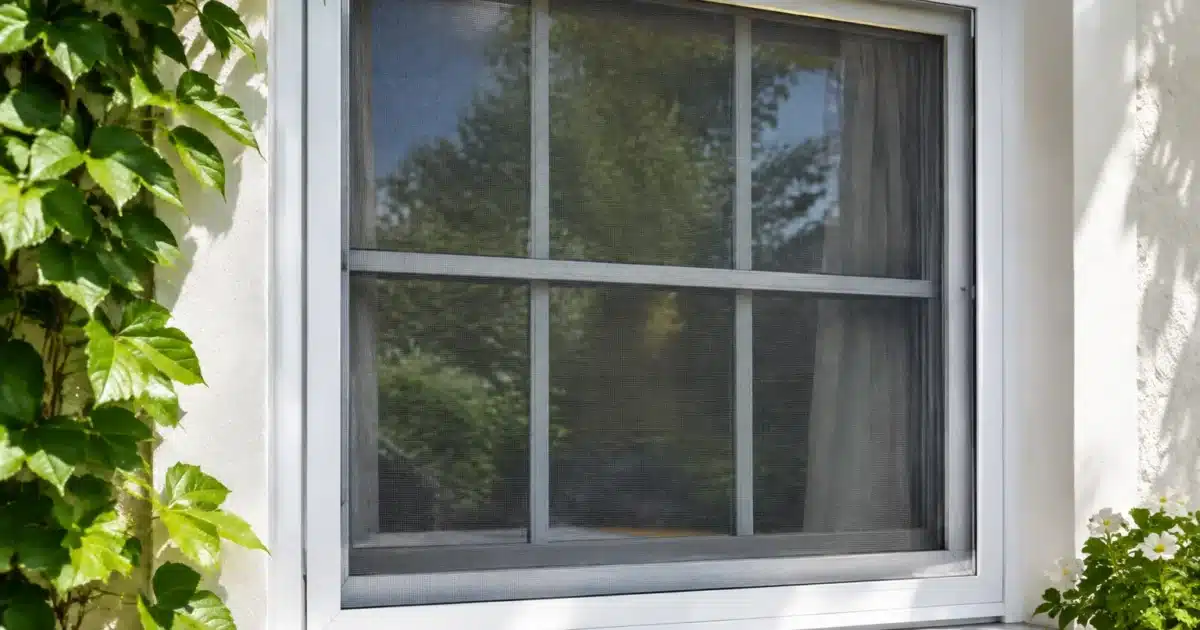
Are you hesitant about removing your window screens when the cold weather arrives? This question comes up every autumn, and the answer isn’t the same for everyone. It all depends on the type of installation, how your windows are exposed, and your priorities between natural light and cleanliness.
In practical terms: a fixed window screen in good condition can often stay in place year-round without major issues. A retractable screen paired with a roller shutter requires more attention, as it can interfere with the mechanism if it’s misaligned. In both cases, the decision mainly depends on how much light you lose and whether you need to preserve solar heat during winter.
Can you leave window screens in place all year?
There’s technically nothing preventing you from keeping a screen installed during winter. Modern models, with aluminum frames and UV-treated mesh or netting, resist bad weather reasonably well. The real issue isn’t the durability of the equipment, but the impact on natural light and solar heat gain coming through the window.
In winter, every ray of sunlight passing through a pane contributes a little to naturally warming a room—something to keep an eye on with this simple test to detect cold air leaking through your windows. Even a thin mesh filters some of this light and slightly reduces these free heat gains. On a home with good south-facing exposure, this loss can show up on your heating bill, especially if several windows are affected—which ties into the benefit of closing shutters at the right time to retain heat.
The advantages of keeping window screens in winter
Removing and reinstalling screens with each seasonal change takes time, storage space, and sometimes tools. Many households choose to leave them in place for convenience, and this option has real benefits.
Protection against dust, pollen, and dirt
A screen acts as a natural filter against dust, pollen, and outdoor dirt that accumulate on glass panes and window sills. Even when closed in winter, a window with a screen stays cleaner longer, reducing the need for frequent window and frame cleaning. For people sensitive to allergens, this extra filtering is worth noting, even outside mosquito season.
Slight improvement in thermal insulation
A well-fitted frame and tight mesh create a thin layer of air between the pane and the outside. This effect is modest, but it can slightly reduce heat loss through gaps, especially on older or poorly weatherproofed windows. It’s not a substitute for good thermal insulation, but a free bonus since the equipment is already there.
When should you remove window screens for winter?
Never kill
another plant.
Take a photo: the app names the species, spots the problem and tells you exactly what to do.
Certain situations clearly call for seasonal removal. If your home lacks natural light in fall and winter, it’s better to free up your windows to make the most of the limited sun available. This is especially true for north-facing rooms or ground-floor homes that are already dim.
The material also plays a big role in this decision. Thin, fragile mesh that’s poorly protected can tear under snow, ice, or repeated bad weather. A solar screen, designed to filter heat in summer, loses all its purpose in winter since it blocks the heat gains you’re after during this season. In this specific case, removal becomes almost automatic.
| Situation | Keep in place | Remove |
|---|---|---|
| Fixed screen, sturdy frame | Recommended | Optional |
| Thin mesh or delicate netting | Not recommended | Recommended |
| Window with limited sun exposure | Possible | Rarely needed |
| Room already dark in winter | Avoid | Recommended |
| Solar screen (heat blocking) | Not recommended | Recommended |
Window screens and roller shutters: precautions to take
When a retractable screen shares space with a roller shutter, the room in the housing or shutter box is often tight. Poor adjustment can jam the mechanism, wear out rails prematurely, or prevent the shutter from closing fully—an issue similar to the one avoided by these steps to protect your blinds before the cold months. Before winter, it’s worth checking that the screen retracts smoothly without resistance and doesn’t rub against the shutter when it’s down.
Tap to scan your plant
This feature requires the Plantalya app. Scan any plant instantly with your camera!
If you notice any play, unusual noise, or resistance when operating the shutter, it’s better to temporarily remove the screen rather than force the whole system. Repeated jamming wears out hinges and tracks, ultimately costing more than simple seasonal storage.
The mistake that damages mechanisms: forcing a roller shutter over a misaligned screen. A two-minute check before winter prevents much longer repairs come spring.
How to maintain your window screens before winter (if you keep them)
Never kill
another plant.
Take a photo: the app names the species, spots the problem and tells you exactly what to do.
If you decide to keep your screens in place, a cleaning before the cold arrives is still a good habit. A quick vacuum with a soft brush or lightly damp cloth is enough to remove dust buildup on the mesh and frame. Avoid harsh products that could weaken the mesh or discolor the frame.
A quick visual inspection also helps spot loose areas, loose fasteners, or early tears. For removable models—the ones you choose to take down—storing them flat, away from moisture and rodents, prevents unpleasant surprises when nice weather returns.
In practice, the best approach is often a hybrid one: keep screens on windows with limited sun exposure where they make sense in winter, and remove those that genuinely deprive a room of light or interfere with a roller shutter. This solution avoids the all-or-nothing choice and adapts to each home’s actual setup.