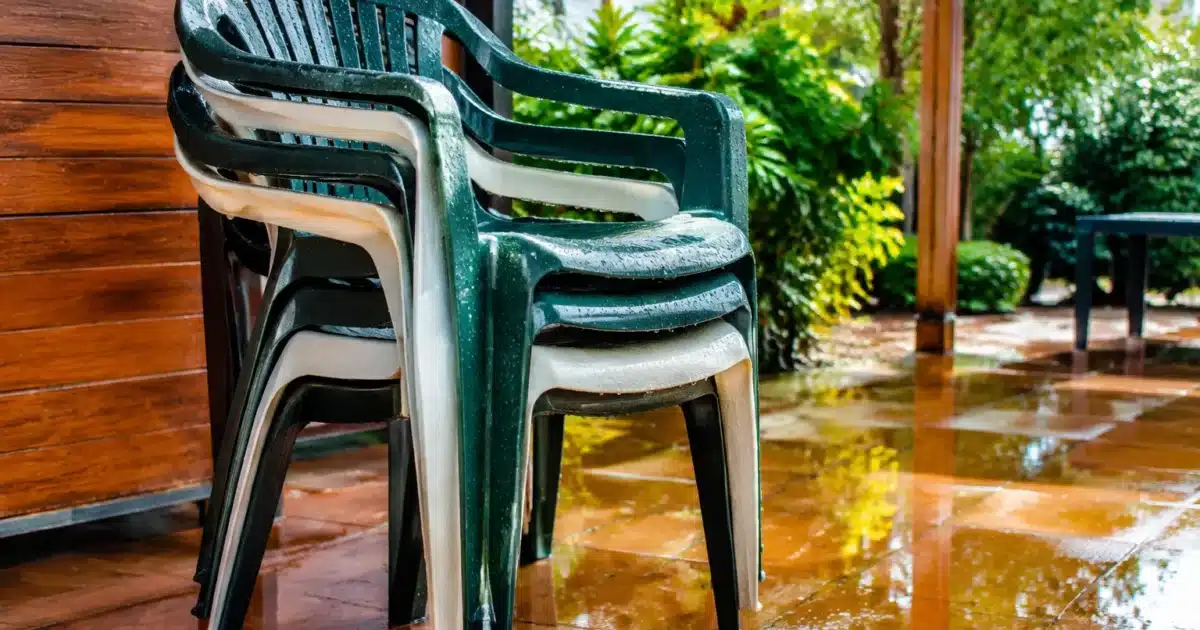
You rush to bring your patio furniture inside before the cold sets in, eager to get everything stored away before the rain arrives. A few months later, as spring arrives, you discover dark spots on the cushions and a musty smell coming from the wood. The culprit isn’t winter itself, but the moisture that remained trapped under the cover when you packed it away.
Storing patio furniture that’s still wet, even slightly damp, is enough to trigger a mold growth process that develops silently throughout the winter months. The solution comes down to two simple but often overlooked steps: thorough cleaning and complete drying before putting anything away. Without these two steps, no cover, however good it may be, can truly protect your furniture.
Why Storing Damp Garden Furniture Causes Mold and Deterioration
When you cover or store a patio set while it’s still damp, water cannot evaporate. It remains trapped between the furniture and the cover, or within the cushion fibers. This stagnant moisture creates an ideal microclimate for fungi and mold, especially if the furniture sits undisturbed for several months, shielded from air and light (a phenomenon similar to mistakes that allow moisture to enter the home).
The problem worsens with winter temperature swings. At night, cold causes condensation to form inside the cover, adding more water to what’s already there. Wood swells and then cracks, resin becomes dull, and metal can rust. If frost arrives on top of it all, water trapped in fibers or joints freezes, expands, and speeds up cracking.
Complete Cleaning and Drying: Two Essential Steps Before Storage
Deep Clean to Prevent Stains and Residue
Before any winterization, careful cleaning of your patio furniture is essential, just like with these summer items to clean before storing. Dust, tree sap, food residue, or pollen trap moisture and feed mold growth far faster than plain rain would. A wash with soapy water, followed by thorough rinsing, removes these residues that turn into stubborn stains once locked away for several months.
For cushions, hand cleaning with a soft brush and neutral soap usually does the trick. Removable covers can often go in the washing machine on a low temperature setting, but check the labels first to avoid damaging water-repellent fabrics.
Never kill
another plant.
Take a photo: the app names the species, spots the problem and tells you exactly what to do.
Dry Completely Before Covering or Storing
This is the most often overlooked step, and the most crucial. Resin or plastic furniture may seem surface-dry within an hour or two, but can retain moisture in joints or hollow feet for several days. Wood typically needs 48 to 72 hours of air-drying, away from direct sunlight that could cause it to split.
The sign that furniture is truly dry: run your hand inside the joints, under the seat, in the corners of the cushions. No hint of coolness or dampness should remain. For thick cushions, lay them flat to dry, turning them regularly to prevent moisture from staying trapped deep in the padding, where it’s invisible but definitely present.
The Classic Mistake with Waterproof Covers
Many people think a completely waterproof cover offers better protection from frost and bad weather. It’s actually the opposite: without any air circulation, residual moisture from the furniture or condensation produced inside stays trapped permanently. A breathable cover that lets water vapor escape while blocking rain does a far better job of preventing mold.
Tap to scan your plant
This feature requires the Plantalya app. Scan any plant instantly with your camera!
Scan Your Plant — Download Free AppChoosing the Right Protection to Avoid Destructive Condensation
Your choice of protective cover makes all the difference over time. A breathable polyester cover lets moisture gradually escape while keeping the furniture dry from rain. A waterproof non-breathable cover, on the other hand, acts like a sealed tarp: it prevents outside water from getting in, but also traps the moisture that forms inside through condensation.
Never kill
another plant.
Take a photo: the app names the species, spots the problem and tells you exactly what to do.
| Cover Type | Advantage | Main Risk |
|---|---|---|
| Breathable | Allows humidity and condensation to escape | Less effective against heavy rainfall |
| Waterproof | Blocks all outside water infiltration | Traps internal moisture, promotes rot |
For a closed shelter like a garage or shed, a lighter cover is sufficient since the furniture is already protected from direct exposure to the elements. For outdoor storage, under a pergola or against a wall, always choose the breathable version, and add a waterproof tarp on top only during heavy rain, much like with checking outdoor blinds before heavy storms.
Where and How to Store Your Patio Set to Avoid Stagnant Moisture
The best storage location is a dry, well-ventilated space: a garden shed, garage, or unheated sunroom works perfectly. If you don’t have covered storage, elevate your furniture on blocks or pallets to prevent direct contact with cold, damp ground, which is a frequent source of moisture rising through capillary action.
Cushions deserve special attention: store them in a breathable bag or ventilated container, never in a hermetically sealed plastic bag, so they survive the winter without absorbing ambient moisture. Come spring, before bringing the furniture back out, do a quick check: look for suspicious stains, smell for mustiness, and let everything air out for a few hours before using it for the first time that season.