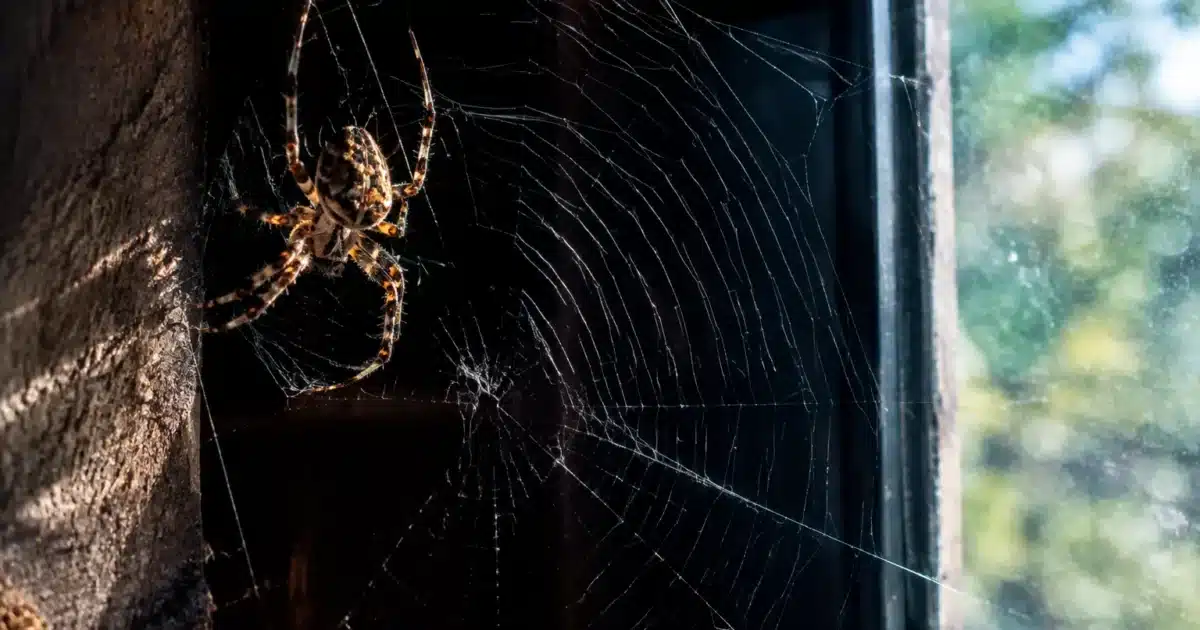
Noticing more spiders in your home lately? It’s not your imagination. As soon as the nights start getting cooler, these little creatures abandon the garden to seek a cozy shelter indoors. And they don’t settle randomly: certain corners of the house clearly have their preference.
Here are the 6 places where spiders seek refuge first when autumn arrives, and why these hiding spots attract them so much.
Why spiders seek shelter in your home when it gets cold
With dropping temperatures, spiders lose their external heat sources and their usual prey becomes scarce. Your home then becomes a logical option: it offers a stable climate, moisture in certain areas, and especially insects that continue to circulate throughout the year. This behavior is part of their natural life cycle, a way to survive the cold season rather than a sign of an invasion.
The 6 places where spiders hide when nights get chilly
Certain areas of your home combine everything a spider is looking for: peace and quiet, darkness, and easy access from outside. Here are the six most common hideouts.
1. Infrequently visited spaces and storage rooms
Basements, laundry rooms, sheds, or old garages are among the favorites, areas that actually rank among the places in your home to clean before winter. These are low-traffic areas, rarely cleaned, where webs can be spun without being disturbed for weeks. The less you visit, the more secure spiders feel.
2. Cracks, holes, and gaps in walls
Cracks and small holes in walls, baseboards, or foundations offer a direct passage between outside and inside, much like those mistakes that let moisture into your home when the first rains arrive. Poor insulation in these areas lets some cool air through, but also allows spiders to slip effortlessly toward a warmer corner of your home.
3. Window and door frames
Older windows and doors, with worn seals, create tiny openings perfect for slipping inside for shelter (you can actually check using this paper test to detect cold air leaks if your windows are affected). It’s also often where flying insects cluster, attracted by evening light, making it a ready-made pantry for spiders settled nearby.
Never kill
another plant.
Take a photo: the app names the species, spots the problem and tells you exactly what to do.
4. Dark and hard-to-reach corners
Under staircases, in ceiling corners, behind heavy furniture, or at the back of closets: dark and difficult-to-access corners are classic hideouts. Attics and basements often combine darkness, quiet, and a temperature warmer than outside, a winning combination for them.
5. Behind long-stored objects
Forgotten boxes, furniture rarely moved, storage containers stacked for months: these stored objects form real little refuges. Spiders spin their webs there and sometimes deposit their cocoons, hidden from view and sheltered from drafts.
6. Humid areas or near heat sources
Bathrooms, under sinks, around pipes: everywhere there’s a bit of moisture, spiders find something to hydrate themselves. Conversely, they also appreciate areas near heat sources, like behind a radiator or near a boiler, a perfect compromise between comfort and discretion.
Tap to scan your plant
This feature requires the Plantalya app. Scan any plant instantly with your camera!
Scan Your Plant — Download Free AppSystematically destroying every web you see might seem logical, but it doesn’t solve the underlying problem. As long as insects circulate in your home, new spiders will keep coming back to settle. It’s better to act on the entry points rather than on the visible symptoms.
How to spot spider activity in your home
Never kill
another plant.
Take a photo: the app names the species, spots the problem and tells you exactly what to do.
Webs stretched in corners or near windows remain the most visible sign, especially in the morning when they catch the light. Small silky clusters of whitish or grayish color, often stuck in a discreet corner, correspond to cocoons containing eggs, a sign that a colony could settle permanently. A nighttime observation with a flashlight, especially in the areas mentioned above, also makes it possible to spot active individuals and measure the real extent of their presence.
| Sign observed | What it means |
|---|---|
| Fresh webs each morning | Active presence, spider still on site |
| Cocoons in a dark corner | Reproduction underway, risk of multiplication |
| Many dead insects on the floor | Regular feeding area for the spider |
Tips to limit their entry and coexist peacefully
Prevention starts above all with sealing cracks and holes, as well as checking the seals on windows and doors. Regularly airing out and dusting storage rooms greatly reduces the appeal of these places, as does occasionally moving objects that have been stored for a long time. Reducing humidity in sensitive rooms also limits the insect population, and therefore indirectly that of spiders that feed on them.
It’s important to keep in mind that the vast majority of indoor spiders are harmless and play a useful role in regulating insect populations. A true infestation remains rare: in most cases, a few simple steps are enough to regain a more peaceful home without having to worry about it throughout the winter.