November arrives, flowerbeds become bare, and the garden takes on that grayish appearance that discourages even the most dedicated gardeners. Yet certain shrubs refuse to follow this script. They keep their leaves, bring color to their bark, produce flowers when everything else sleeps, or cover their branches with brilliant berries.
Here are six shrubs that transform a drab winter garden into a living scene, each offering something concrete and how to showcase it.
Why invest in shrubs with winter interest?
A successful garden is not judged only in June. The evergreen shrub with winter interest prevents the “black hole” effect between November and March: it structures flowerbeds, feeds birds when seeds are scarce, and gives you a reason to venture outside and admire the garden even in cold weather. Combining persistent foliage, decorative berries, and winter blooms allows you to have a colorful garden year-round, without waiting for spring to return for enjoyment.
1. Nandina domestica, the sacred bamboo
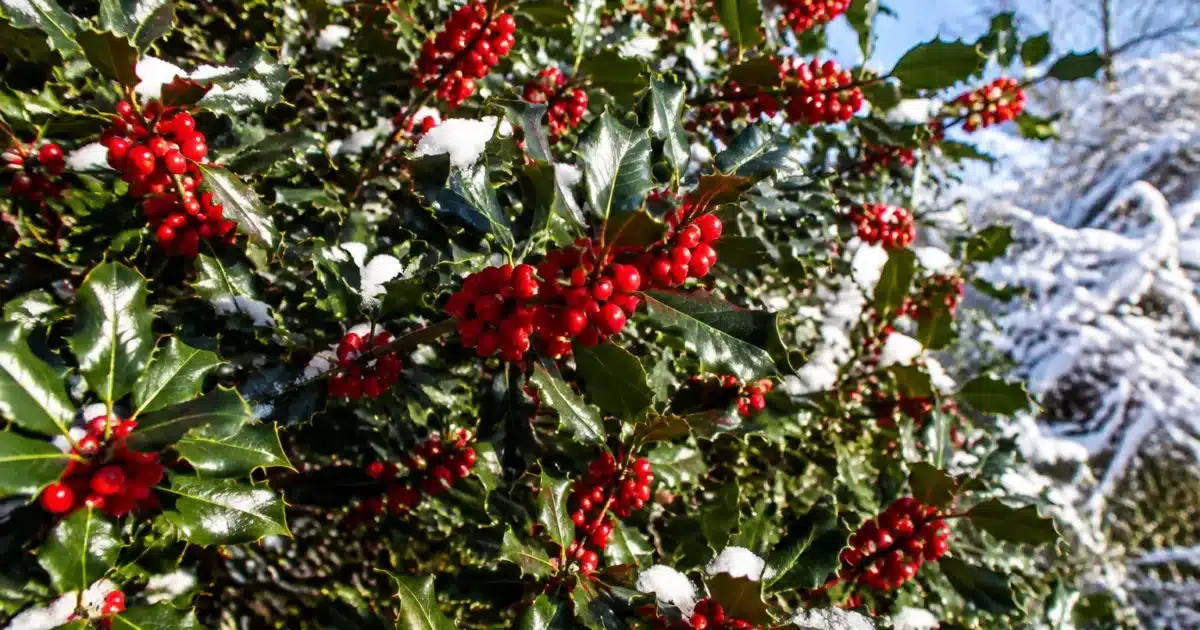
Despite its name, this is not a true bamboo but a shrub with fine, feathery foliage that turns copper-red with the first frosts. Its clusters of bright red berries often persist until January, offering striking contrast with the foliage. It grows equally well in the ground or in pots, in full sun or part shade, and remains robust against cool winters.
Placed at the back of a border or standing alone near an entrance, Nandina domestica immediately captures attention when everything around it is bare.
2. Chinese Loropetalum, purple foliage and ribbon-like flowers
Loropetalum displays deep purple-tinted foliage year-round, making it a reliable choice for creating contrast in a planting bed dominated by green. In late winter, it becomes covered with tiny ribbon-like flowers in fuchsia pink, somewhat like a miniature witch hazel. It prefers part shade, well-drained soil, and handles pot cultivation well on a sheltered terrace.
Its flexible silhouette makes it an excellent choice for an informal hedge or mixed border with late-blooming perennials.
3. Mahonia, fragrant yellow winter blooms
Few shrubs flower in the depths of winter: Mahonia does, with clusters of bright yellow, fragrant flowers that attract the first bees whenever a sunny spell appears. Its persistent foliage, feathery and slightly spiny, adds a graphic touch even without flowers. It tolerates part shade or even partial shade, making it a precious asset under deciduous trees.
Never kill
another plant.
Take a photo: the app names the species, spots the problem and tells you exactly what to do.
After flowering, blue berries appear, extending the visual interest of this easy-to-grow shrub even further.
The mistake to avoid with Mahonia
Planting it in scorching full sun quickly dries out its foliage. Reserve part shade or shaded exposure for generous winter blooming and dense foliage year-round.
4. Fatsia japonica, exotic graphic foliage
With its large lobed and glossy leaves, Fatsia japonica instantly brings an exotic flair to a garden corner, even in the depths of winter. This persistent foliage remains rich green year-round, requiring no flowering to capture attention. It thrives in part shade, dislikes direct full sun which scorches its leaves, and proves surprisingly drought-tolerant once established.
Grown in a pot on a shaded terrace or in the ground at the base of a north-facing wall, it structures the space with generous, graphic volume.
Tap to scan your plant
This feature requires the Plantalya app. Scan any plant instantly with your camera!
5. Pittosporum, variegated foliage and fragrant blooms
Pittosporum appeals with its persistent foliage often streaked with cream or light green, which visually brightens dark winter plantings. In spring, it produces small, discrete but highly fragrant flowers, almost sweet-smelling. Its dense growth makes it an excellent candidate for a clipped hedge or pot cultivation in full sun.
It is an easy-to-grow shrub, tolerating several soil types, provided you avoid stagnant moisture in winter.
6. Abelia grandiflora, extended flowering and semi-evergreen foliage
Abelia grandiflora extends the blooming season far longer than most shrubs, from spring until the first frosts. Its semi-evergreen foliage takes on copperish tones in autumn before dropping partially depending on winter severity. Planted in full sun, it flowers more abundantly and develops a particularly elegant arching form when grown as a specimen.
Never kill
another plant.
Take a photo: the app names the species, spots the problem and tells you exactly what to do.
Its nectar-rich flowers also make it an ally for late-season pollinators, an asset often overlooked when choosing ornamental shrubs.
| Shrub | Winter asset | Exposure |
|---|---|---|
| Nandina domestica | Red berries, copper foliage | Sun / part shade |
| Loropetalum | Purple foliage, pink flowers | Part shade |
| Mahonia | Fragrant yellow blooms | Part shade / shade |
| Fatsia japonica | Graphic persistent foliage | Part shade |
| Pittosporum | Variegated foliage, fragrant blooms | Sun |
| Abelia grandiflora | Extended flowering, copper foliage | Sun |
How to plant and care for them properly?
Planting is ideally done in autumn, when soil remains warm and moist (roots become established before winter and the shrub starts more vigorously the following spring), like this robust shrub that advantageously replaces hydrangeas and should be planted now. In the ground, dig a hole two to three times wider than the root ball, loosen the soil at the bottom, and water generously after planting even if rain is expected. In pots, choose a container with good drainage and growing medium suited to evergreen shrubs, then monitor watering which remains the primary cause of failure in pot cultivation.
Pruning is usually limited to light cleanup after blooming, to maintain dense form without sacrificing future flower buds. Avoid pruning just before winter (this stimulates tender shoots, fragile against frost), and discover which shrubs should not be pruned now lest you lose their future flowers. A mulch layer at the base protects roots from temperature swings and limits evaporation, a real advantage for newly planted specimens or those grown in full sun exposure.