One plant forgotten in a corner of the garden, and the entire next season is thrown off balance. Some weeds need only a few extra days to transform a discrete presence into a lasting invasion. The window to act closes quickly, and it’s already beginning to close right now.
Here are the 7 weeds to spot and remove without delay: shepherd’s purse, chickweed, galinsoga, thistle, couch grass, bindweed, and oxalis. They are champions of seed reproduction and spreading root systems, and each one deserves quick action before it has time to set seed.
| Weed | Type | Mode of Spread | Action to Take Now |
|---|---|---|---|
| Shepherd’s Purse | Annual | Very abundant seeds | Pull before siliques form |
| Chickweed | Annual | Very short cycle, abundant seeds | Hoe at first flowers |
| Galinsoga | Annual | Continuous flowering | Remove before each new wave of seeds |
| Thistle | Perennial | Seeds plus deep roots | Cut flowering stem and dig out root |
| Couch Grass | Perennial | Spreading rhizomes | Extract entire root, not just leaves |
| Bindweed | Perennial | Stolons and seeds | Follow stem to main root |
| Oxalis | Perennial | Bulbils and projectile seeds | Pull before capsules burst |
Why Are Some Weeds So Invasive?
The difference between a troublesome weed and a true invasion often hinges on just a few weeks. Annual weeds bet everything on quantity: they flower quickly, set seed rapidly, and disappear leaving behind a stockpile of seeds capable of germinating for years to come. A single shepherd’s purse left unremoved can scatter several thousand seeds before autumn arrives.
Perennial weeds play a different game. They rely on rhizomes, stolons, or deep roots that regrow even after shallow pulling. Couch grass and bindweed perfectly illustrate this principle: cutting the visible part is never enough, you must reach the underground network to have any hope of slowing down its comeback.
In both cases, the critical moment remains the same: just before seed set. Once the plant reaches this stage, each day of delay multiplies the number of seeds that will fall to the ground, ready to germinate the next year or even several seasons later depending on the species.
The game-changing number
A single shepherd’s purse plant left in place can produce up to 40,000 seeds before it withers. Multiply that by a few neglected plants in a flower bed, and you have an entire population establishing itself for seasons to come.
The 7 Weeds to Remove Urgently Before Seed Set
Annual Weeds with Explosive Reproduction
Shepherd’s purse is recognized by its small white flowers and characteristic triangular seed pods. It completes its cycle in just a few weeks and sets seed almost continuously from spring to autumn. Chickweed, more spreading in habit, quickly colonizes loose, moist soils thanks to an equally rapid life cycle.
Never kill
another plant.
Take a photo: the app names the species, spots the problem and tells you exactly what to do.
Galinsoga, less well known but formidable in vegetable gardens, flowers without interruption as soon as it finds warmth. Thistle, often classified among the most tenacious perennials, combines both strategies: it produces wind-borne seeds while developing deep roots capable of regenerating the entire plant.
Spreading Perennials and Seed Producers
Couch grass advances underground through rhizomes that can travel several meters in a single season. Each rhizome fragment left in the soil regrows, making manual pulling essential and thorough. Bindweed works similarly, with stolons that wind around neighboring plants while producing viable seeds for years.
Oxalis, often underestimated, combines underground bulbils with explosive capsules that propel seeds a good distance the moment they’re touched. This very mechanism makes manual pulling tricky: it’s best to act early in the morning when the capsules are still closed.
Tap to scan your plant
This feature requires the Plantalya app. Scan any plant instantly with your camera!
Scan Your Plant — Download Free AppHow to Effectively Remove These Weeds Now
Manual weeding remains the most reliable method when it comes to intervening before seed set. For annuals like shepherd’s purse or chickweed, simple hoeing is enough, provided you cut just below the collar to prevent regrowth.
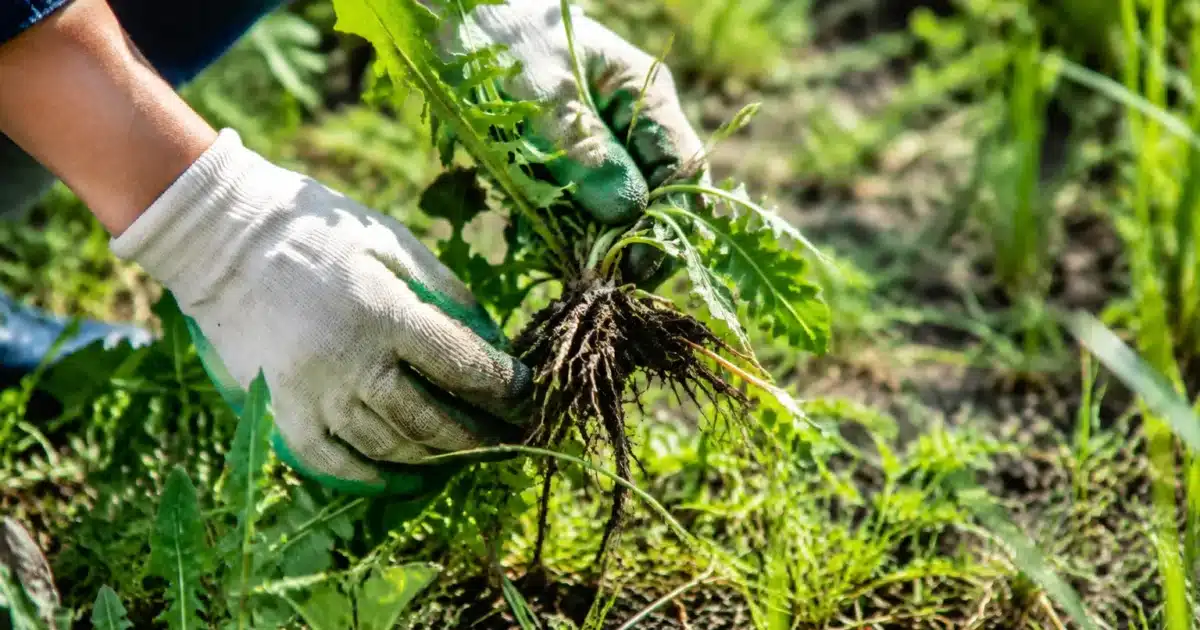
For perennials with deep roots like thistle or couch grass, manual pulling requires more patience: you must loosen the soil around the plant, follow the root or rhizome along its entire length, and remove the whole thing without leaving a fragment. Regular hoeing of the soil between waterings also limits the germination of seeds already present in the earth.
Never kill
another plant.
Take a photo: the app names the species, spots the problem and tells you exactly what to do.
Bindweed and oxalis deserve particular attention: pull them before flowers open or capsules burst, or you risk dispersing the seeds yourself by tugging on the stem. A bag or bucket at hand allows you to collect debris immediately rather than leaving it on the soil.
Preventing Regrowth After Weeding
Once the area is cleared, mulching becomes the simplest ally for preventing new seeds from germinating. A thick layer cuts off the light needed for annual weed seedlings to emerge and slows the spread of any remaining perennials.
False sowing complements this approach effectively on cultivated areas: by watering bare soil a few days before planting, you encourage dormant seeds to germinate so you can eliminate them with a simple hoe before they compete with young plants. This rotation between hoeing, mulching, and regular monitoring prevents a new invasion from starting even in seed-enriched soil.