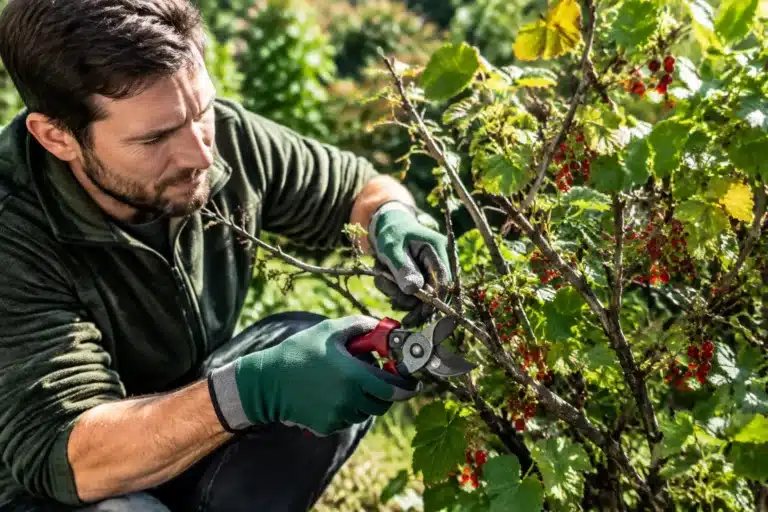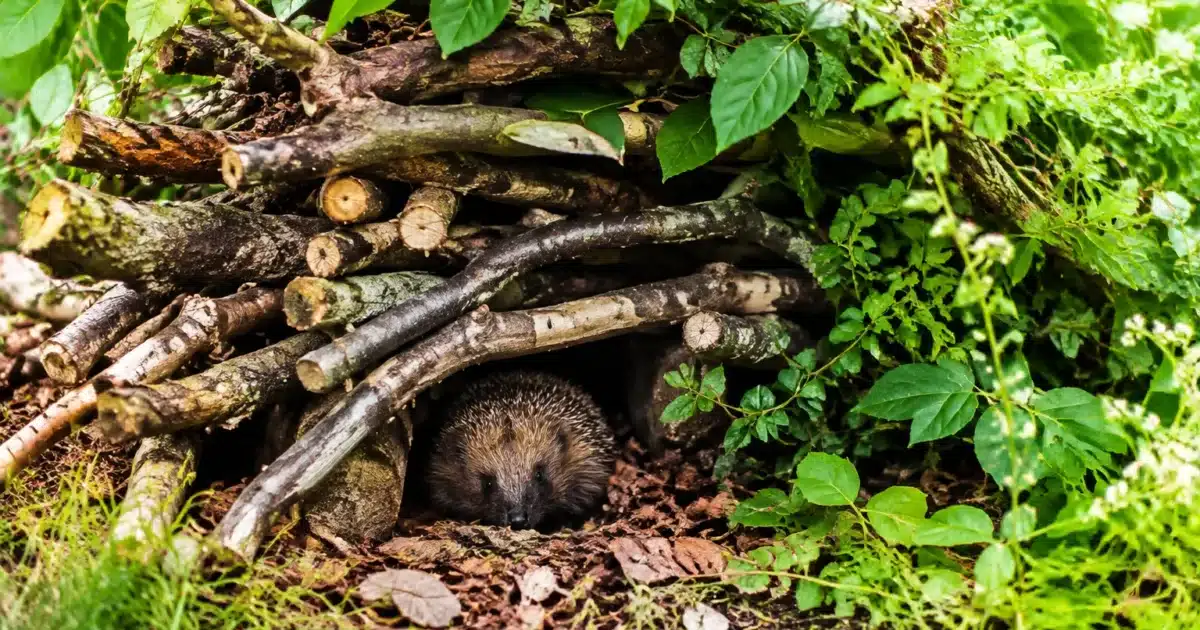
You’ve just finished pruning your shrubs and you’re staring at that pile of branches with a weary sigh, already thinking about the trip to the waste site. Hold on. That little heap of wood, left sitting in a corner of your garden for a few weeks, can transform into a natural shelter for dozens of species. Hedgehogs, birds, beneficial insects: they’re all looking for exactly this kind of hideaway to get through winter or nest peacefully, as our roundup of garden spots to leave untouched before winter reminds us.
The method is straightforward. Choose a quiet corner, sheltered from wind and slightly shaded, against a hedge or wall. Start by stacking the thickest branches on the ground to create an airy base, then gradually add finer twigs on top, forming a small dome roughly a meter in diameter. Aesthetic perfection isn’t the goal: the more irregular the pile, with holes and cavities throughout, the more welcoming it will be. Seasoned gardeners have a precise name for this arrangement: the dead hedge or living branch pile, and it requires no maintenance once it’s installed.
Why Keep Your Pruned Branches in Your Garden: The Hidden Benefits
Throwing away green waste means depriving yourself of a free resource. Dead wood that decomposes slowly nourishes the soil, harbors essential microscopic life, and serves as a food source for an entire food chain. A garden that retains some of its pruning residue becomes more alive, more resilient to drought, and less dependent on store-bought products.
Symptom Checker
Check the symptoms you observe on your plant:
It’s also a zero-waste approach that saves you trips to the waste site, which are often time-consuming and polluting—a principle you’ll also find in our guide on where to leave fallen leaves in your garden. Keeping branches on site closes the cycle of matter right in your own ecological garden.
Never kill
another plant.
Take a photo: the app names the species, spots the problem and tells you exactly what to do.
Creating a Wildlife Haven: The Branch Pile, a Biodiversity Star
A well-positioned branch pile quickly becomes its own small ecosystem. Unlike store-bought shelters, it offers dozens of different entrances and nooks, suited to the varied needs of different species.
How to Build an Effective Branch Pile or Dead Hedge
For a dead hedge or branch pile to truly function as a refuge, a few details matter. Choose a stable location that won’t be moved once it’s built, because animals that settle there often return year after year. Vary the wood diameters, from thick logs to fine twigs, to create multiple types of cavities. Avoid packing it too tightly: air must circulate so the pile stays dry on the surface and damp inside, a perfect balance to attract diverse wildlife.
Which Animals Will Move In and Why
Hedgehogs love these piles for hibernating, safe from frost and predators. Birds like robins and wrens find low nesting spots near the ground, completely secure. Among beneficial insects, ground beetles, beetles, and hover flies take shelter there and do the vegetable garden a favor by devouring slugs and aphids. Don’t forget solitary bees and certain lacewings, which prefer dry wood for laying eggs. This quiet flourishing makes the branch pile one of the most effective pillars of a garden that nurtures biodiversity without any costly projects.
Tap to scan your plant
This feature requires the Plantalya app. Scan any plant instantly with your camera!
Install your branch pile between September and November, before the first frosts. Hedgehogs are actively seeking hibernation sites then, and a pile that’s already stable will give them more confidence than a freshly built heap.
Turning Your Branches Into Protective, Nourishing Mulch
Not all branches are destined to become a refuge. The finer twigs and tender shoots can be shredded to produce wood chips, one of the garden waste materials that replace store-bought mulch, protecting the soil from temperature swings and limiting weed growth. Spread at the base of flower beds or the vegetable patch, this chipped wood retains moisture and breaks down gradually, feeding a living soil rich in microorganisms.
This practice significantly reduces the volume of green waste you need to haul away, while delivering a visually neat result, far more appealing than mineral mulch.
Never kill
another plant.
Take a photo: the app names the species, spots the problem and tells you exactly what to do.
Other Smart Uses for Branches in the Garden
Structure and Support: Borders, Stakes, Natural Windbreaks
Straight, rigid branches make excellent natural stakes for supporting tomatoes, climbing peas, or young shrubs. Woven between posts, they can also create rustic borders that nicely define a flower bed. Stacked tightly in a hurdle, they form a natural windbreak that protects delicate crops from prevailing winds, without resorting to an artificial fence.
Enrich Your Compost With Chipped Wood
Chipped wood brings valuable carbon-rich matter to compost, which often lacks balance when you’re adding only vegetable scraps and grass clippings. This mix of green materials and wood chips speeds decomposition and produces a more fibrous compost, ideal for aerating heavy soils.
| Branch Type | Recommended Use |
|---|---|
| Large branches, logs | Base of branch pile, wildlife shelter |
| Fine, flexible twigs | Wood chips for mulch, compost |
| Straight, rigid branches | Stakes, borders, windbreaks |
Before you load up the trailer for the waste site, take a good look at what you have on hand. A dead hedge in a discreet corner, a bit of chipped wood on the beds, a few salvaged stakes: these simple gestures transform pruning scraps into valuable resources, and give your garden a wilder, more generous appearance, more welcoming to everything that lives within it.