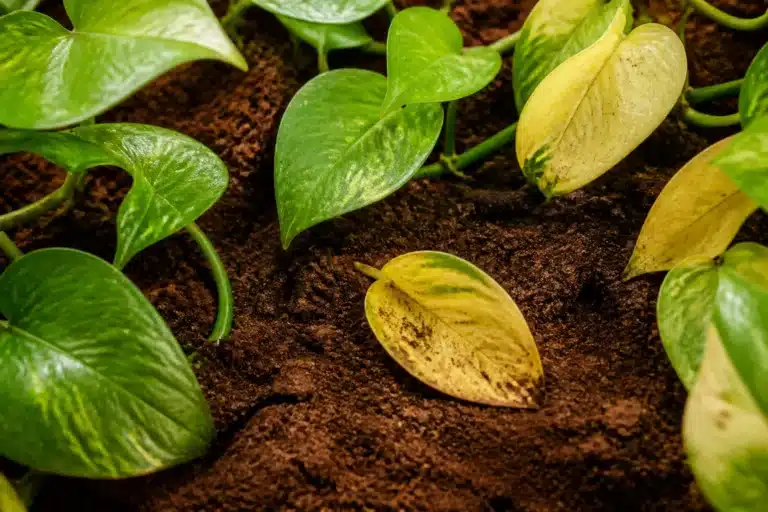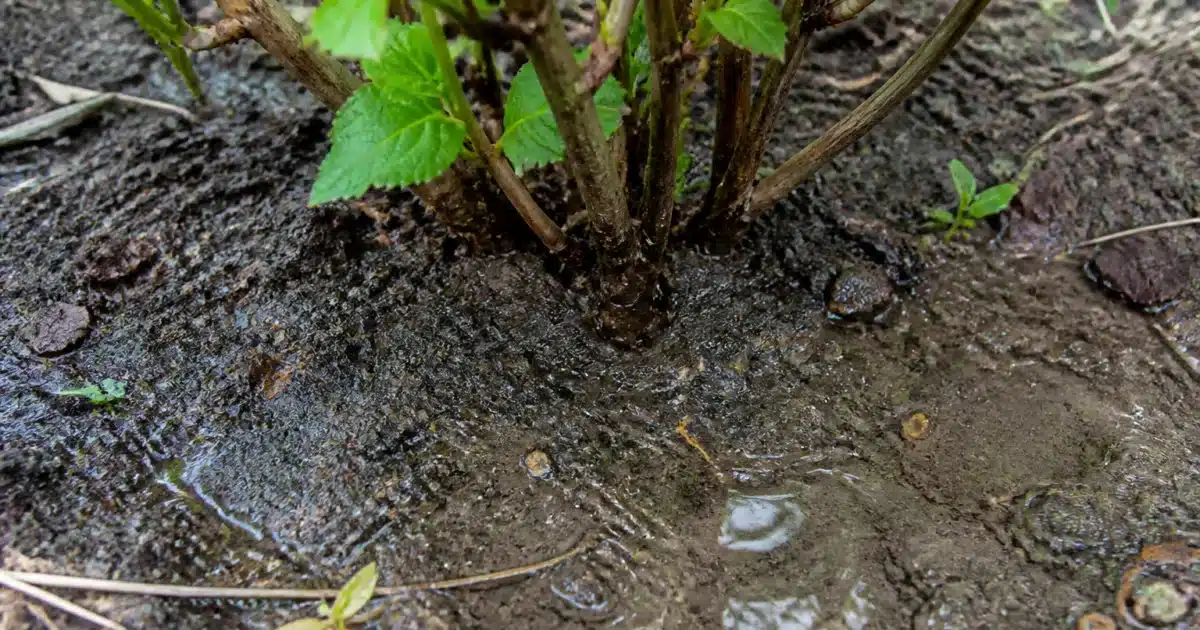
You planted your hydrangea carefully, the first year passed without problem, then the second… but from the third year onwards, it slowly declines. Yellow leaves, flowering diminishes, branches die one by one. Yet you water it regularly. The culprit? An invisible mistake at planting time, incorrect depth that progressively suffocates the roots.
The fatal error: planting at the wrong depth
Most hydrangeas fail because of a single mistake: planting the rootball either too deeply or too shallowly. It is a discreet error, almost invisible at first, which makes it insidious.
When you plant a hydrangea, the top of the rootball must be level with the surrounding soil. Not buried, not raised. This precise position ensures the rootball rests in the soil without being completely submerged. If the rootball disappears under 5 to 10 centimetres of soil, rot gradually sets in. If the rootball is too shallow, roots dry out during hot periods.
During the first two years, your hydrangea can survive by drawing on its remaining reserves. The plant shows no obvious alarm signs. It even flowers, which reassures you. But from the third year onwards, when the root system begins to rot or deteriorate, collapse is rapid and devastating.
Why this error condemns the hydrangea long-term
Root suffocation and collar rot
Excessive depth creates an anaerobic environment around the rootball. Roots no longer find enough oxygen and begin to rot, even if the soil is not waterlogged. This rot is a silent killer: you cannot see it underground, but it progresses. Fungi take advantage of this suffocated zone to colonise the collar, making the plant incapable of transporting water and nutrients upwards.
Conversely, planting too shallowly exposes the rootball to temperature shocks and rapid drying during the first hot summers. Roots, which should remain cool and moist, overheat. They shrink, lignify prematurely, and lose their ability to absorb water and nutrients.
Progressive weakness invisible in the early seasons
What makes this error so dangerous is its initial invisibility. For two years, your hydrangea may seem normal. It even produces flowers, which gives you false confidence. But each season, the root system weakens. Roots do not regenerate properly. The plant spends most of its energy surviving, not growing.
By the third year, the energy reserve is exhausted. Leaves yellow, first a few, then gradually the entire canopy. Branches die from the inside out. At this stage, even if you correct watering or add mulch, it is too late: the roots are too damaged.
How to plant at the correct depth: the foolproof method
The solution is simple, but requires precision at planting time. Here is how to do it:
Never kill
another plant.
Take a photo: the app names the species, spots the problem and tells you exactly what to do.
- Dig a planting hole slightly wider than the rootball, with depth equal to the rootball height.
- Place the rootball in the hole without pushing it down.
- Check that the top of the rootball is level with the surrounding soil. You should see where the stems begin at the surface.
- Fill the hole with a mixture of ericaceous compost and garden soil (50/50).
- Firm gently without compacting.
- Water thoroughly to eliminate air pockets.
A good check: after planting, the top of the rootball must never be buried. You must be able to see where the stems actually begin. If the rootball has sunk and you can no longer see this demarcation, you have planted incorrectly.
Adding mulch is crucial, but apply it after a few weeks of soil consolidation, not immediately. Spread a layer of 5 to 7 centimetres around the plant (without touching the base of the stems) to retain moisture and regulate soil temperature.
Other discreet errors that weaken your hydrangea
Alkaline or poorly prepared soil
Even planted at the correct depth, a hydrangea in alkaline soil will decline slowly. These plants require acidic soil with a pH between 5.5 and 6.5. Neutral or alkaline soil blocks the absorption of aluminium and iron, elements essential for the plant. Symptoms appear gradually: chlorotic leaves (yellowing with green veins), fewer flowers.
Tap to scan your plant
This feature requires the Plantalya app. Scan any plant instantly with your camera!
Scan Your Plant — Download Free AppBefore planting, test your soil pH. If you have alkaline soil, add ericaceous compost and sulphur to correct it. This preparation must be done before planting, not after.
Unsuitable position: too much direct sun
A hydrangea planted in full sun will struggle to survive. These plants prefer dappled or light shade, particularly in the afternoon. Too much intense sun dries the foliage, excessively stresses the roots, and encourages pest attacks. Choose a position with bright morning light and partial afternoon shade.
What to do if your hydrangea declines after 2-3 years?
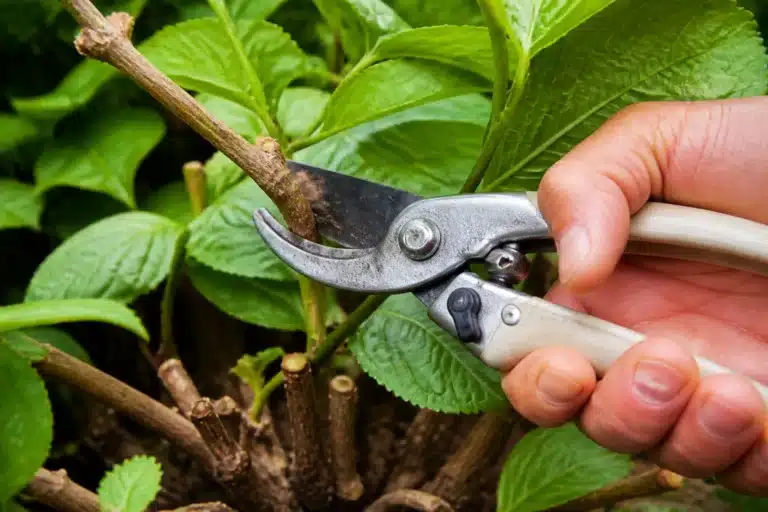
If your plant shows advanced signs of decline (dead branches, very little foliage), salvation comes through radical intervention. In late winter, before growth resumes, prune hard back to 30-40 centimetres from the soil. This forces the plant to produce new stems from the base.
At the same time, check that the rootball has not sunk into the soil over time. Soil settling can worsen the problem. Lift the plant gently and readjust if necessary. Improve drainage by adding coarse sand or perlite around the base. Finally, check that the soil pH remains acidic.
Never kill
another plant.
Take a photo: the app names the species, spots the problem and tells you exactly what to do.
These adjustments, combined with patience over two seasons, can restore your hydrangea to health. But prevention is better than cure: correct planting from the start spares you three years of disappointment.
The rootball, the invisible key
The top of the rootball must be level with the soil surface – a principle the RHS applies across many plants. This simple rule determines whether your hydrangea lives long or gradually disappears. No fertiliser or treatment can compensate for incorrect planting depth.