

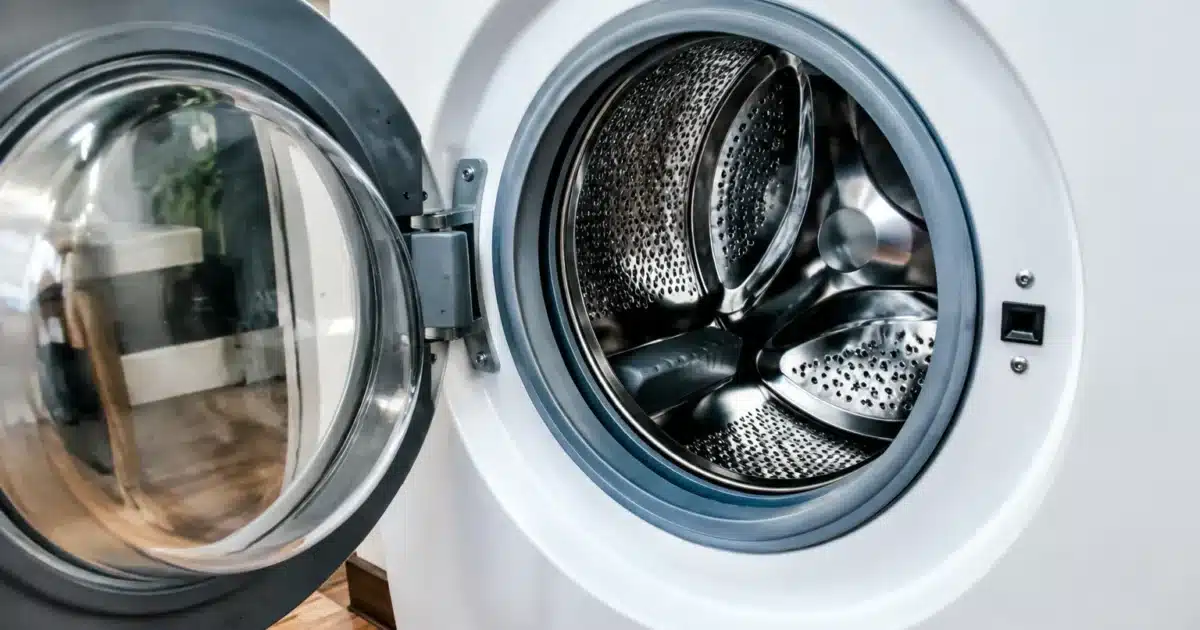
You’ve probably seen it recommended countless times: leave your washing machine door open after a wash cycle. It might seem like old-fashioned advice, but UK manufacturers, retailers and consumer experts consistently recommend it as one of the simplest and most effective ways to keep your machine fresh and functioning properly.
The reason is straightforward. After a wash cycle, the drum and rubber door seal retain residual moisture. If you close the door immediately, that moisture has nowhere to go. It sits in the machine, creating the perfect environment for mould, mildew and the musty odours that can end up transferring to your clean clothes. Leaving the door slightly open for one to two hours after each wash allows that moisture to evaporate and air to circulate through the drum.
Why leave the washing machine door open?
A front-loading washing machine is essentially a sealed environment during the wash cycle. Once the programme finishes, water remaining in the corners of the drum and especially in the rubber door seal doesn’t evaporate instantly. With the door closed, this moisture creates ideal conditions for mould and bacteria responsible for that unpleasant musty smell, a problem that tends to get worse over time.
Symptom Checker
Check the symptoms you observe on your plant:
By leaving the door open, you allow ambient air to circulate and speed up the natural drying of both the drum and the seal. It’s simple aeration, but it makes a real difference in the long term, particularly if your machine is installed in poorly ventilated spaces like a utility room without windows or a bathroom with limited air flow.
Never kill
another plant.
Take a photo: the app names the species, spots the problem and tells you exactly what to do.
What UK manufacturers recommend
Major appliance makers take this seriously. They consistently advise leaving the washing machine door slightly ajar between washes to limit mould formation and protect the door seal. Many user manuals and care guides emphasise aeration of the drum as a preventative measure against odours and mould.
Some newer models even include a reminder notification when the cycle finishes, prompting users to leave the door open for a while. This isn’t marketing gimmickry—it’s manufacturers themselves recognising that this simple habit is an integral part of the recommended maintenance needed to ensure your appliance lasts as long as possible.
The risks of closing the door straight away
Lingering moisture and musty odours
Closing the door immediately after a wash traps humidity inside a sealed space. Without air circulation, water takes much longer to evaporate. The result is a stale, musty smell that gradually develops in the drum and transfers to your laundry in subsequent washes, even with fragrant detergent.
Tap to scan your plant
This feature requires the Plantalya app. Scan any plant instantly with your camera!
Scan Your Plant — Download Free AppWear on the seal and mould growth
The rubber door seal is particularly vulnerable. Water naturally pools in the creases and folds, and permanent moisture encourages black mould spots to form. Over time, prolonged contact with water degrades the rubber material, causing it to lose elasticity and crack, leading to leaks and expensive repairs.
The mistake many people make
Closing the washing machine door immediately after removing your laundry, thinking you’re saving space or keeping things tidy. This is precisely what traps humidity and speeds up mould growth on the seal.
Should you leave the door open all the time?
While aeration is beneficial, leaving the door wide open permanently creates other problems. Dust will accumulate in the drum, and an open hublot poses a genuine safety risk in homes with young children, who may be tempted to climb in or accidentally lock themselves inside whilst playing.
The right balance is about timing. This isn’t about converting your washing machine into a permanently open piece of furniture, but giving it a window of aeration after each cycle—just long enough for the moisture to escape.
Never kill
another plant.
Take a photo: the app names the species, spots the problem and tells you exactly what to do.
The right habit to adopt: timing and precautions
Manufacturers and appliance care professionals generally recommend one to two hours of door-opening after each wash. This timeframe is sufficient to dry out both the drum and seal without exposing the machine to the risks associated with a permanently open door.
These additional steps reinforce this habit and genuinely extend your appliance’s lifespan:
- Wipe the rubber door seal with a dry cloth after each cycle, paying particular attention to the creases where water collects
- Leave the detergent drawer open for a few minutes so it can dry out as well, as it often traps damp residue
- Close the door once the drum feels dry, especially if children or pets are around the machine
- Run a hot empty cycle once a month to shift limescale deposits and any mould residue
This simple routine, far from being outdated advice, protects both the hygiene of your laundry and the mechanical integrity of your machine. The recommendation made sense long before manufacturers printed it in their instruction manuals.


