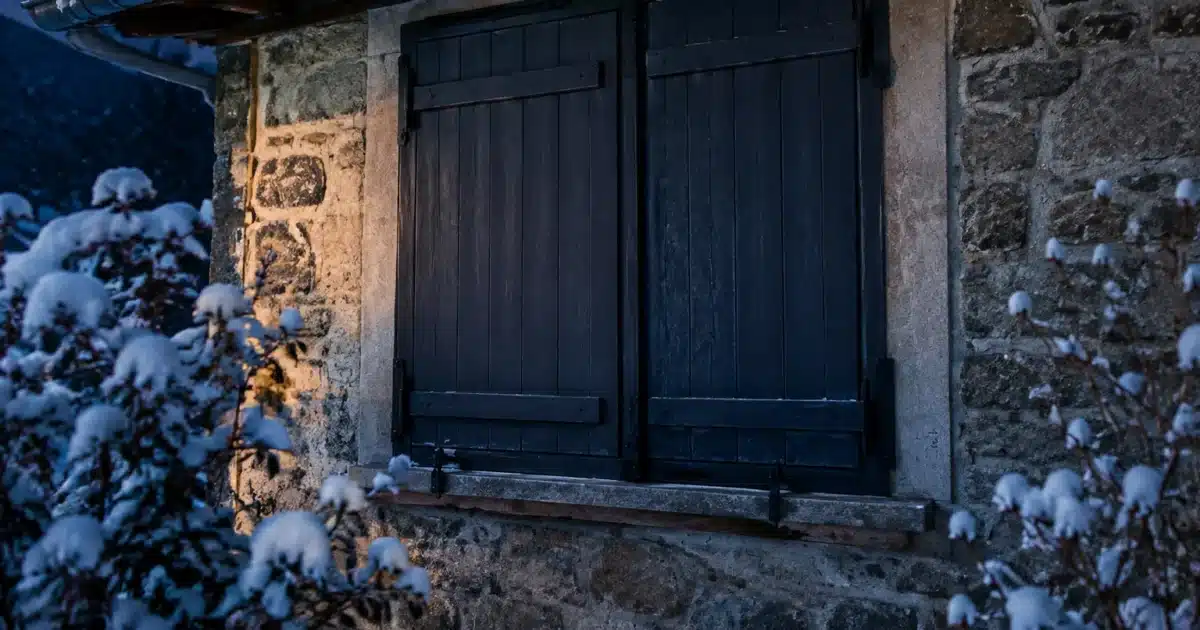
The thermometer drops as soon as the sun disappears. This subtle shift in season, almost imperceptible, actually hides a simple habit that can make a real difference to your comfort and energy bills: closing your shutters at the right time. Not just any time, not just any way.
The rule is simple: close your shutters at the exact moment of sunset, or just after, before the outside temperature drops sharply. This is when your home begins to lose the heat it accumulated during the day. By acting early, you trap this warm air against your windows instead of letting the cold settle in as night falls.
Why closing shutters really helps keep the heat in
Windows, even those equipped with good double glazing, remain the weak points in a home’s envelope. This is where a large portion of thermal losses escape, especially at night when the temperature difference between inside and outside is greatest. The glass lets cold through by simple conduction, and without protection, this loss continues until morning.
By closing your shutters, you create an additional air gap between the window and the outside. This layer of still air acts as a natural insulator: it slows down temperature exchanges and limits how much the glass cools down. The result is that indoor temperature stays higher for longer, and heating doesn’t have to compensate continuously.
What time should you close your shutters to minimize heat loss?
The key marker is sunset. This is when the temperature actually starts to drop, often even before night has fully set in. Closing your shutters at sunset allows you to maximize the sun’s daytime heat gains while cutting off the first nocturnal losses right from the start.
Conversely, opening your shutters at sunrise lets in natural light and warmth, which reduces your heating needs during the day. This routine—closing at dusk, reopening in the morning—works like a free thermostat that follows the natural rhythm of the seasons.
Never kill
another plant.
Take a photo: the app names the species, spots the problem and tells you exactly what to do.
Up to 60% fewer losses
According to ADEME, an unprotected window can account for up to 15% of heat loss in a poorly insulated home. Adding closed shutters at night significantly reduces these losses, complementing high-performance glazing.
Not all shutters are equal: which type to prioritize in winter?
Tap to scan your plant
This feature requires the Plantalya app. Scan any plant instantly with your camera!
Scan Your Plant — Download Free AppThe type of shutter you choose directly influences the energy efficiency of the gesture. Roller shutters, especially those with insulated boxes, offer good air tightness when fully lowered to the bottom, with no gaps. Solid wooden hinged shutters also retain good insulating properties, provided the seals and weatherproofing around the frame are in good condition.
Older models that are poorly maintained or have damaged slats let warm air escape through small gaps that may seem harmless but, added up, impact heating consumption. An effective shutter must close completely, with no visible space at the top or sides, to truly act as a barrier against the cold.
Never kill
another plant.
Take a photo: the app names the species, spots the problem and tells you exactly what to do.
| Shutter type | Winter insulation |
|---|---|
| Roller shutter with insulated box | Good, if closed all the way down |
| Solid wood hinged shutter | Good, if seals are maintained |
| Old louvered shutter | Fair to poor, often has gaps |
Complementary habits to optimize insulation
Closing shutters isn’t always enough on its own if the rest of the envelope lets air through. Regularly check the condition of seals around windows and doors: a simple renewed weatherstrip can be enough to plug the most common air leaks. Thermal bridges—those spots where insulation is interrupted (poorly insulated roller shutter boxes, window surrounds, wall corners)—also deserve special attention, as they often concentrate a significant portion of losses.
Adding insulated thermal curtains in front of windows strengthens the barrier against cold even further, especially in rooms where shutters are absent or ineffective. This combination of closed shutters and drawn curtains creates a double layer of protection that really limits the sensation of cold drafts near openings during winter nights.
This daily habit, repeated each evening as nights grow cooler, requires no special investment. It fits into an energy savings approach accessible to everyone, without costly work or equipment, simply by respecting the right timing between sunset and the return of nighttime cold.