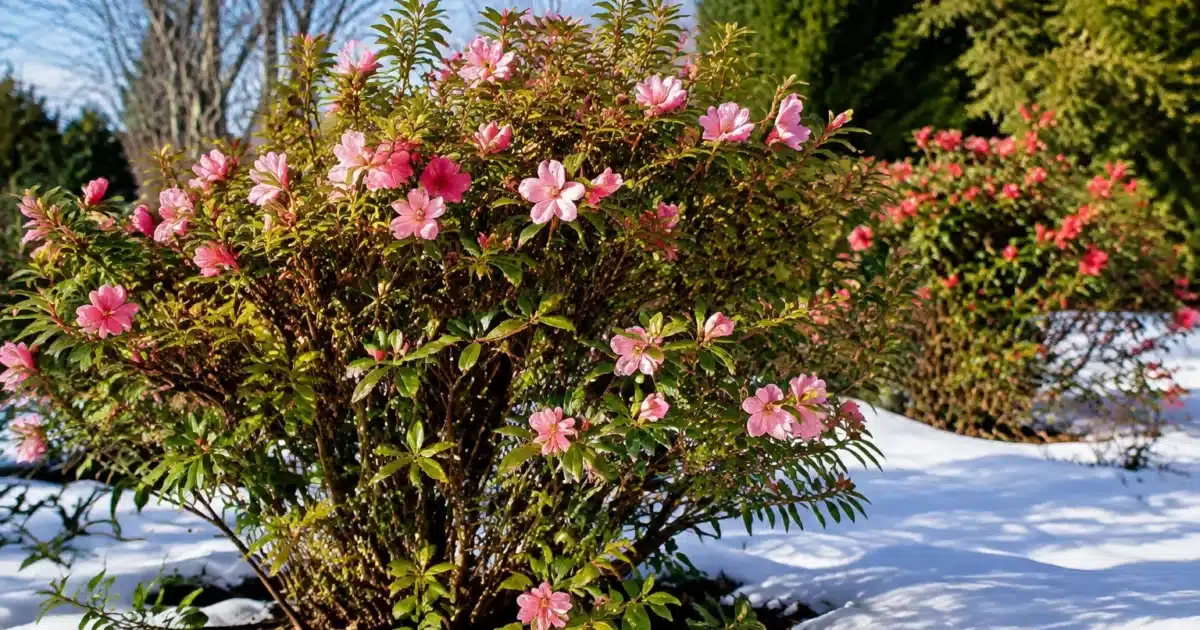
Pruning shears in hand, you might be tempted to freshen up your garden, but first make sure to identify those faded flowers best left untouched rather than pruned. For certain shrubs, it’s a terrible idea. Many have already formed their flower buds, and poorly placed cuts can eliminate an entire season’s worth of blooms in one go.
The rule is simple: shrubs with spring flowering prepare their blooms as early as the previous summer or autumn. Pruning now means cutting branches that already bear future buds. The result? Nothing opens the following spring, and you’ll have to wait a full year to see beautiful colors again.
Why pruning now can wipe out your shrubs’ flowering
The mechanism varies from plant to plant. Shrubs with early flowering, like lilac or forsythia, bloom on last year’s wood. Their flower buds form as early as late summer, well before winter sets in. If you cut the branches at this time, you’re directly eliminating the points from which flowers will emerge.
Conversely, other shrubs bloom on the current year’s wood. For them, late pruning poses no problem and may even stimulate them. The key is to identify the type of flowering before bringing out your tools, rather than following a universal calendar that doesn’t suit all species.
9 shrubs you absolutely must not prune now
Spring-flowering shrubs
Lilac tops the list. It forms its buds as early as the previous summer, and pruning outside the right season destroys much of the following year’s flowering. The same applies to forsythia, whose yellow spring branches are prepared months in advance.
Mock orange, weigela, and flowering currant follow the same pattern. These are all early-flowering shrubs best left completely alone until after the flowers have faded. Old-fashioned non-repeating roses deserve the same caution, as certain varieties only bloom on wood formed the year before.
Mediterranean and tender perennial shrubs
Lavender hates being cut too early or too short outside its ideal window. Severe pruning out of season weakens the plant and compromises the following summer’s flowering. Hydrangea responds the same way when its terminal buds are accidentally cut.
Never kill
another plant.
Take a photo: the app names the species, spots the problem and tells you exactly what to do.
Large-flowered clematis, the kind that climbs along walls, also belongs on this list of plants to protect. Depending on the variety, it flowers on old wood, and untimely cutting deprives the plant of spring blooms. Finally, certain Mediterranean evergreen perennials struggle when cut back hard before they’ve delivered their flowers, which durably weakens the plant.
| Shrub | Flowering type | Ideal pruning time |
|---|---|---|
| Lilac | On last year’s wood | Just after flowering |
| Forsythia | On last year’s wood | Just after flowering |
| Hydrangea | Buds formed in autumn | Late winter, without touching terminal buds |
| Lavender | On current year’s shoots | Late summer, after flowering |
| Large-flowered clematis | Depending on variety, often old wood | After flowering, light pruning |
When and how to prune these shrubs without losing their flowers
Tap to scan your plant
This feature requires the Plantalya app. Scan any plant instantly with your camera!
Scan Your Plant — Download Free AppBest practice remains pruning after flowering. Once flowers fade, the shrub has time to form new wood before autumn, wood on which next season’s buds will appear. For lilac and forsythia, simply cut just after the last flower, without waiting weeks.
For lavender, late summer works best, once the flower spikes are cut, while avoiding cutting into old wood that struggles to regrow. Ornamental fruit trees with spring flowers, like ornamental cherry, follow the same light-pruning logic after flowering, unlike trees to prune before August 31st to avoid losing a year.
The mistake that costs you a year of blooms
Never kill
another plant.
Take a photo: the app names the species, spots the problem and tells you exactly what to do.
Cutting a lilac or hydrangea during the typical pruning season, thinking you’re “tidying up” before winter, means severing already-formed buds. The plant survives, but remains flowerless the following year.
Alternative care tasks to maintain your shrubs without pruning them
Nothing prevents you from caring for the garden while waiting for the right time. Light cleanup is enough: remove dead leaves at the base, clear broken or clearly diseased branches, and monitor the overall health of the foliage. This type of garden maintenance doesn’t interfere with developing buds.
Mulching around the base protects roots and limits water stress, promoting vigorous natural spring growth. For perennial beds, light, shallow digging of the soil is enough to aerate it without disturbing developing stems. Patience remains, here, the best gardening tool.