

One night, the temperature drops below freezing without much warning. The next morning, the leaves on your potted plants are blackened, the garden hose has burst, and the last vegetables in your vegetable patch are ruined. This scenario repeats itself every year, yet a few simple gestures, made at the right time, can prevent it entirely.
Cold doesn’t always announce itself several days in advance. A single isolated cold snap at night can be enough to damage plants that would have survived the entire winter if they had been protected in time. Here are ten actions to take before the thermometer stays permanently below freezing.
Why anticipating the first cold nights makes all the difference
A plant that experiences its first frost without preparation suffers a far more violent shock than one facing the same cold after being gradually hardened. The hardiness of a plant is not fixed: it also depends on soil condition, root moisture, and protection provided just before the frost episode. Acting in advance prevents often irreversible damage to plant tissues.
Symptom Checker
Check the symptoms you observe on your plant:
It’s also a matter of timing. Too early, and you deprive plants of useful natural hardening. Too late, and you arrive after the damage is done. The ideal is to act as soon as weather forecasts predict nights below 2 or 3 degrees, without waiting for the first proper hard frost.
The 10 tasks to complete before frost
1. Move or protect delicate potted plants
Potted plants suffer faster than those in the ground, as their roots are exposed to the cold from all sides. Citrus trees, young olive trees, geraniums, and tropical plants should be moved to a conservatory, bright garage, or cold greenhouse before the first night forecast to drop below freezing (provided you don’t bring all your plants indoors at the first sign of coolness, as many actually resist cold quite well).
2. Mulch flower beds, shrub bases, and vegetable gardens
Mulching acts as an insulating blanket for the soil. A layer of 8 to 10 cm of straw, fallen leaves, or wood chips placed around shrub bases and over flower beds limits sharp temperature swings and protects the shallowest roots. In the vegetable garden, it also prevents soil from freezing deeply, making late harvests easier.
3. Install winter fleece on exposed plants
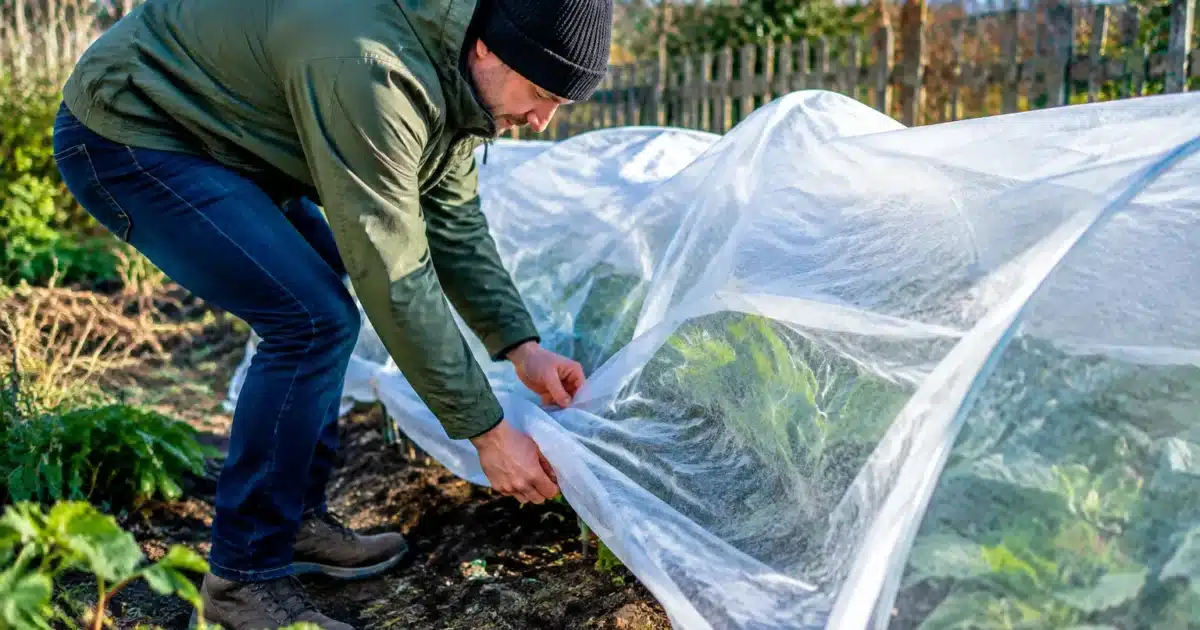
Winter fleece lets air and light through while retaining a few degrees above the foliage. Unlike plastic sheeting, it doesn’t suffocate the plant or accumulate frozen condensation on the leaves. It’s best applied in the late afternoon, before temperatures drop, and fixed without pulling too tight to allow the plant to breathe.
Never kill
another plant.
Take a photo: the app names the species, spots the problem and tells you exactly what to do.
4. Protect young tree trunks
Young fruit trees and newly planted shrubs have thin bark that is sensitive to frost cracks. A jute sleeve, woven straw, or cardboard wrap around the trunk prevents splits caused by temperature swings between day and night.
5. Insulate pots using the double-pot technique
For plants staying outdoors, the double pot remains an effective trick: slide the container into a larger pot and fill the space with mulch, straw, or bubble wrap. This air gap provides insulation that protects roots, which are often more vulnerable than above-ground parts to frost.
6. Water before frost: the counterintuitive trick
A preventive watering just before a cold night may seem risky, but slightly moist soil retains heat better than dry soil, which freezes faster and deeper. Substrate moisture acts as a thermal buffer around roots. You just need to avoid excess water that would sit on the surface and freeze.
7. Drain hoses and purge outdoor faucets
Water remaining in garden hoses freezes and bursts them, often without you noticing until spring. Simply drain them completely, coil them away safely, and purge the outdoor faucets to prevent frost from damaging your garden’s plumbing.
8. Harvest the last frost-sensitive vegetables
Tomatoes, courgettes, aubergines, and beans still growing must be harvested before the first hard frost: these frost-sensitive vegetables cannot tolerate prolonged contact with cold. Leeks, cabbages, and some root vegetables, conversely, tolerate frost very well and sometimes improve in flavor once temperatures drop: this is precisely the time to plant winter vegetables to continue harvesting through the cold months.
Tap to scan your plant
This feature requires the Plantalya app. Scan any plant instantly with your camera!
9. Clean and store garden furniture and tools
Frost damages equipment too: furniture cushions, metal tools, and non-frost-resistant terracotta pots can crack. Quick cleaning followed by storage in a sheltered place extends their lifespan and prevents unpleasant surprises when fine weather returns.
10. Check existing protections: greenhouse, frames, cloches
Before the cold arrives, a quick inspection is needed: a poorly closed greenhouse, a cracked frame, or displaced cloches lose all usefulness. A few minutes of checking ensure these installations will provide full insulation when frost arrives.
The mistake that ruins all your efforts
Using plastic sheeting placed directly on foliage instead of winter fleece. Plastic concentrates moisture, freezes on contact with leaves, and causes worse damage than the cold itself. Breathable textile fleece always remains preferable.
Common mistakes that undermine all your efforts
Never kill
another plant.
Take a photo: the app names the species, spots the problem and tells you exactly what to do.
Some well-intentioned gestures do more harm than good, as shown by the mistake of pruning lavender in August, which weakens plants facing the first frost. Pulling winter fleece too tight crushes stems and breaks the youngest branches. Mulching waterlogged soil promotes root rot instead of protecting it. And forgetting to remove protections during a prolonged warm spell can cause plants to rot or become leggy under unnecessary confined heat.
Garden furniture left outside under poorly secured sheeting suffers damage from stagnant moisture rather than direct frost. Dry, airy storage is better than makeshift protection that traps water.
When to start depending on your region and forecasts
The ideal timeline varies greatly by region. In northern and eastern France, first frosts often arrive by mid-October, while the Atlantic or Mediterranean coast may wait until December. The only truly reliable indicator is watching the weather forecast seven days ahead: as soon as a night below 2°C appears in the models, that’s the signal to start your checklist.
A garden protected gradually, task after task, withstands the first cold much better than a garden caught unprepared. These ten actions, spread over several days rather than done in a rush, are enough to get through the season without loss or costly repairs the following spring.


