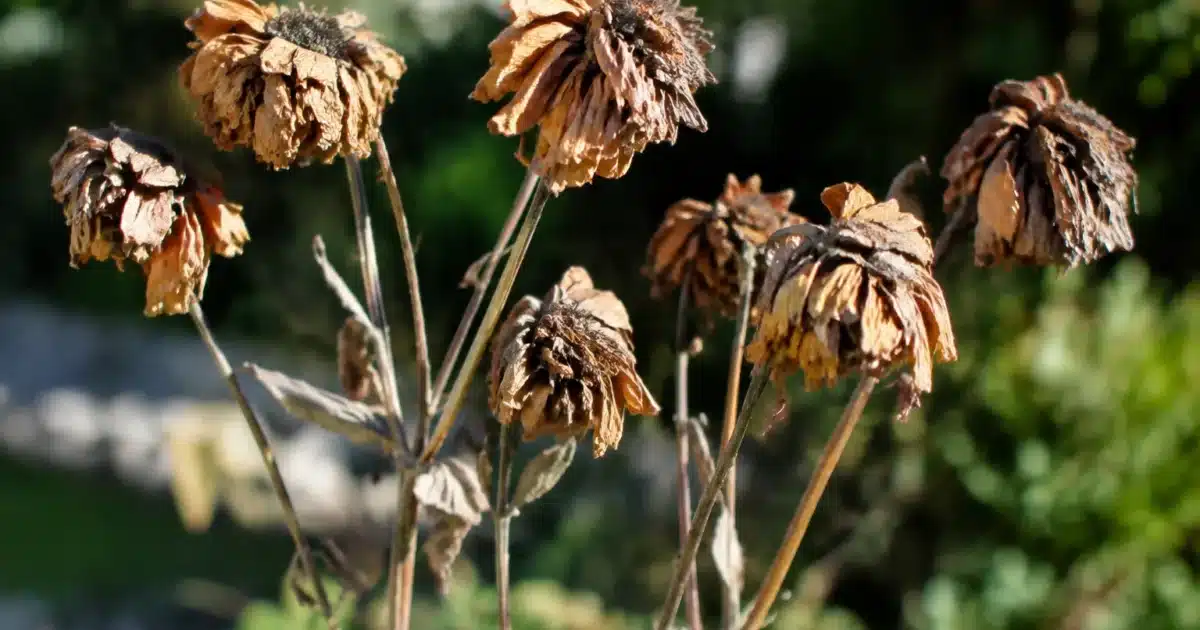
You look at your tired flower beds and your hand reaches for the pruners. Natural reflex, but sometimes a bad idea. Certain faded flowers still serve your garden well after summer: they feed birds, shelter insects, and protect the soil from frost. Here are eight plants to leave as they are, and the real reasons to wait before cutting.
Why leave certain faded flowers untouched
A dry stem is never truly dead as long as it remains standing. The hollow stems of perennials serve as winter refuge for many insects, particularly the larvae of solitary bees and ladybugs that spend the cold season there. Cutting too early means destroying this shelter before it has even been used.
Seeds that remain clinging to faded flower heads also feed birds when food becomes scarce. Goldfinches, tits, and robins readily peck at the dried heads of coneflowers or black-eyed Susans throughout the winter. Not to mention that the ground cover formed by these stems limits erosion and slows frost penetration, a real boost for fragile roots.
Finally, there’s the winter aesthetic, often overlooked. A frost-covered ornamental grass or a sedum dusted with white hoarfrost has its charm, far from the closely cropped bed that looks empty until spring. Landscape designers know it: an ecological garden maintains volume and texture even during dormancy.
8 faded flowers to leave alone
Hydrangeas
The faded flowerheads of hydrangeas protect the young buds located just below them from frost. Cutting now exposes these buds to the first hard freezes and compromises the following season’s bloom, as explained in our article on the right time to prune hydrangeas in autumn without harming flowering. Wait until late winter to intervene, when the risk of severe frost recedes.
Coneflowers
Their spiky dried flower heads are a appreciated pantry for goldfinches. Seeds remain available for several months if you don’t cut them, and the hollow stems welcome useful insects. The classic mistake is cutting them back as soon as the first flower fades, when they actually gain visual interest throughout the winter.
Ornamental grasses
Miscanthus, pennisetum, or stipa create spectacular silhouettes once dry, especially when covered in frost. Their dense foliage also serves as winter refuge for an entire small fauna. Cutting ornamental grasses too early deprives the garden of this spectacle and exposes the crown to cold.
Sedums
Sedums, or stonecrops, keep solid flowerheads even when faded, which beautifully catch the low winter light. These succulent stems also protect the plant’s base from stagnant moisture and frost. Leaving them in place until spring prevents weakening the clump.
Asters
Last to bloom in autumn, asters still offer nectar to late insects like certain butterflies and bumblebees. Once faded, their dry stems in turn shelter larvae for the winter. Systematically cutting once flowering ends deprives these insects of precious shelter.
Never kill
another plant.
Take a photo: the app names the species, spots the problem and tells you exactly what to do.
Black-eyed Susans
Like coneflowers, black-eyed Susans produce seeds highly sought after by seed-eating birds (a similar principle applies to agapanthus, see what to do with agapanthus after flowering, cut or let them set seed). Their sturdy stems stand well upright under snow, which visually structures a bed in the depths of winter. Leave them in place, cutting brings nothing before spring returns.
Yarrow
The flat flower clusters of yarrow dry while forming patterns that beautifully catch frost. They continue to offer discreet shelter to small insects along their rigid stems. There’s no rush to cut them, the plant doesn’t suffer from remaining this way for several months.
Bronze fennel
Its airy foliage and faded flower clusters maintain an elegant structure throughout the winter. Bronze fennel particularly attracts the larvae of swallowtail butterflies, which feed on it the following spring if it remains in place. Removing it too early means taking away a food resource for this emblematic caterpillar.
Quick checklist: cut or leave?
Tap to scan your plant
This feature requires the Plantalya app. Scan any plant instantly with your camera!
Hollow stem or flower head with visible seeds: leave it. Diseased, moldy, or completely collapsed foliage: remove it. Plant fragile in frost (hydrangea, sedum): protect it while waiting for late winter. Robust perennial with stiff stem (grass, coneflower): it holds up fine all winter.
Common mistakes to avoid
The most widespread error remains the aesthetic reflex: you prune as soon as the flower loses its color, out of habit or concern for tidiness. This automatic gesture often ignores the ecological role of the dry stem, and it sometimes occurs at the worst time, just before the first frosts, when cutting weakens the plant instead of preparing it for winter.
Another common mistake: confusing cleanup with formative pruning. Removing a single faded flower on a repeat-flowering rose is nothing like cutting back an entire perennial clump in autumn. You must distinguish between occasional maintenance pruning and structural pruning, which has its own calendar depending on each plant.
Never kill
another plant.
Take a photo: the app names the species, spots the problem and tells you exactly what to do.
Finally, many gardeners forget that garden biodiversity also happens in winter. A “clean” bed year-round, with no stems or seeds, offers fewer resources to insects and birds than those that retain some organized disorder until spring.
When to intervene anyway
The best period to cut back most of these perennials falls in late winter, generally between February and March depending on region, once the heavy frosts have passed but before vegetation restarts. This is the ideal time to cut dry stems to ground level, without risking exposing new buds to cold.
For hydrangeas, wait until new shoots begin to show on the stem before cutting just above them. For ornamental grasses, a clean cut in early spring, before new leaves appear, is enough to trigger dense regrowth. In all cases, better to use a clean, sharp pruner, and make a neat cut that doesn’t wound the crown, knowing that the pruner maintenance mistake that wears out both tool and gardener remains common.
This slight delay changes everything for your garden’s biodiversity without harming aesthetics or plant health. A bit of patience today, and the garden repays you in spring with more numerous pollinating insects and more vigorous blooms.