A cold radiator sitting in your living room in September? Nobody thinks about it. Yet that’s exactly where next winter’s comfort is decided. Waiting until the first cold snap to turn the central heating back on risks discovering a breakdown at the worst possible moment, when every homeowner is calling their heating engineer at once.
Here’s the good news: just one spare hour, while the heating is still off, gives you plenty of time to check everything thoroughly. Five key points are enough to secure your system before the heating season begins: a functionality test, radiator bleeding and boiler pressure check, thermostat verification, filter and vent cleaning, and your annual professional service. Here’s how to do it, step by step.
Why Check Your Heating Now (While It’s Off)?
While your heating is running on minimal setting or completely off, you have time on your side. A problem spotted in October gets fixed within days, without any urgency charges or stress. The same fault discovered on a cold November evening at 5°C outside quickly becomes an expensive emergency call-out, with sometimes weeks of waiting if every heating engineer in the area is swamped.
This preparation period is also the ideal moment to spot a performance drop, a slow leak, or a badly calibrated thermostat before it affects your consumption throughout the entire heating season.
1. Test Your System Before the Cold Arrives
Your first instinct should be to run a complete functionality test, even if temperatures are still mild. Switch on the central heating for a few hours on a day when you’re home, and watch each radiator carefully: does it warm up properly, evenly, without any odd noises?
A radiator that stays cold at the top while the bottom warms up almost always signals trapped air. A gurgling sound, banging pipes, or an unusual smell on startup are worth noting to mention to your heating engineer if needed. It’s also a chance to check that the boiler fires up smoothly and that the flame (if it’s a gas model) is blue and stable.
2. Bleed the Radiators and Check the Pressure
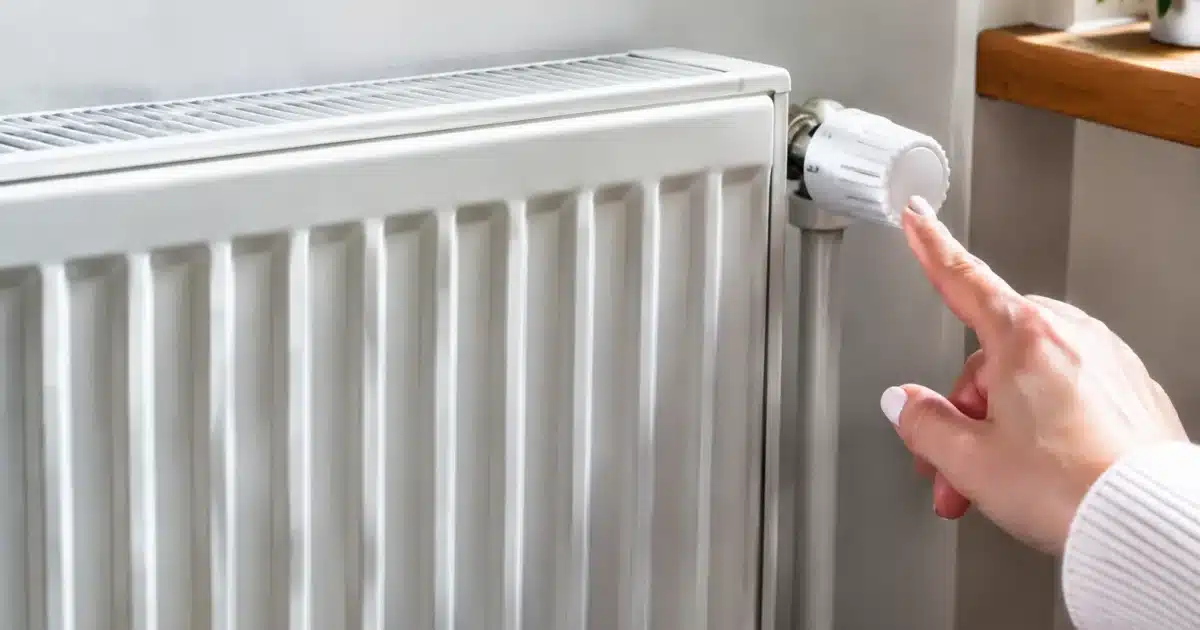
Bleeding your radiators is probably the most effective task on this checklist. Air trapped in the circuit prevents hot water from circulating properly and forces the boiler to work harder for mediocre results. Grab a bleeding key and a small container, open the bleed valve at the top of each radiator gently until water flows without air bubbles, then close it back up.
Once you’ve finished bleeding, check your boiler pressure on the pressure gauge. It should generally sit between 1 and 1.5 bar when cold, but check your appliance manual to be sure. If the needle is too low, topping up the water via the fill valve should restore the correct pressure.
Never kill
another plant.
Take a photo: the app names the species, spots the problem and tells you exactly what to do.
| Check | What to Observe | Action |
|---|---|---|
| Radiator cold at the top | Air in the circuit | Bleed with the appropriate key |
| Low pressure (<1 bar) | Gauge in the red | Top up via the fill valve |
| Noise or smell on startup | Potential fault | Contact a heating engineer |
Filling your boiler to 2 or 3 bars “to be safe” damages seals and sometimes triggers the safety valve. Always stay within the manufacturer’s recommended range—neither too low nor too high.
3. Check Your Thermostat and Programming
A badly calibrated thermostat skews your entire consumption for the season. While the heating is still off, test the controls manually, change batteries if it’s a wireless unit, and verify that the time and programmed days match your actual daily routine, especially if your work schedule has changed since spring.
Tap to scan your plant
This feature requires the Plantalya app. Scan any plant instantly with your camera!
Scan Your Plant — Download Free AppIf you have a reversible air-conditioning unit alongside or instead of central heating, the same applies: test the heating mode before autumn, check that switching between cooling and heating works smoothly, and confirm the remote responds properly.
4. Clean Filters, Vents, and Clear Equipment
A clogged filter—whether on a boiler, heat pump, or ventilation unit—forces the appliance to use more energy for worse results. Remove it according to the manufacturer’s instructions, clean or replace it, and take the chance to dust off the vents that may have collected debris over the summer.
Also check that no furniture, curtains, or boxes are blocking a radiator or the outdoor unit of a heat pump. An unobstructed system heats better and faster, which shows directly on your bill from the first cold days.
5. Schedule Your Annual Professional Service
Never kill
another plant.
Take a photo: the app names the species, spots the problem and tells you exactly what to do.
An annual service by a qualified engineer remains your best insurance against a heating breakdown in the depths of winter. For a boiler, this service is legally required every year in most cases, and it allows you to spot a worn component before it fails completely.
Book this appointment in September or early October: engineers’ schedules fill up quickly once the cold sets in, and getting ahead of the rush means you won’t be waiting weeks for an available slot during peak heating season.
By following these five steps while the heating is still off, you’re starting the winter from a solid foundation: fewer breakdown risks, better energy management, and the confidence that warmth will flow as soon as you press that button.