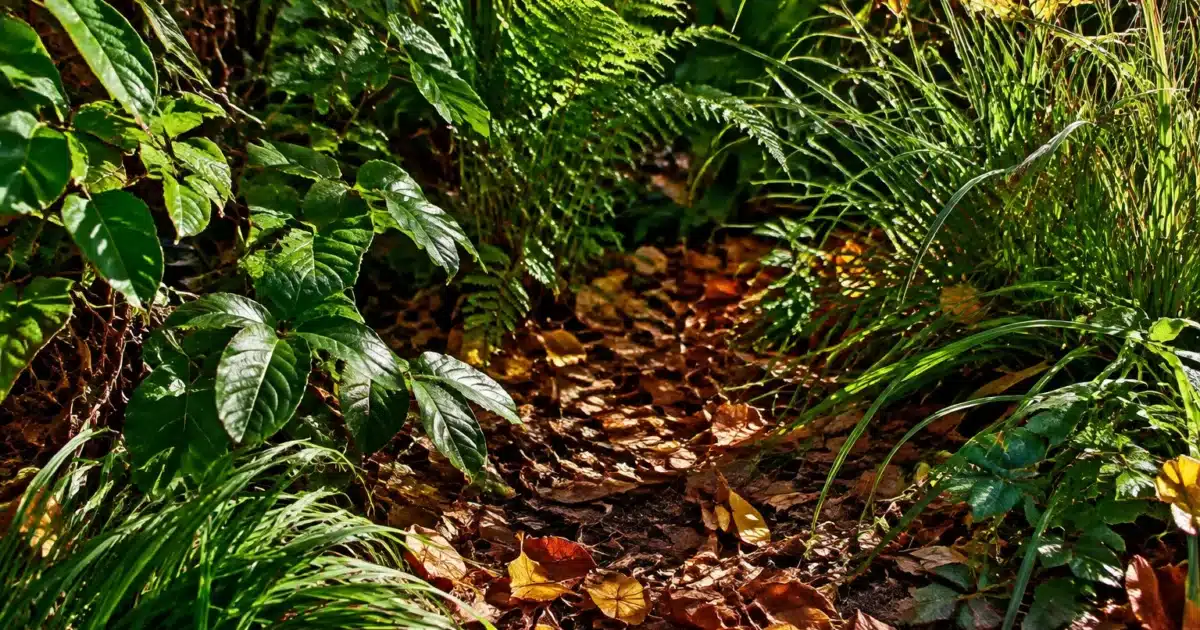
Before pulling out the rake and pruning shears at the first sign of frost, also take time to check the points to verify around the house before fallen leaves accumulate. Wait a bit. Certain corners you consider neglected are actually harboring an entire discreet ecosystem. A pile of leaves, a somewhat dense hedge, tall grass left untouched: these are vital refuges for garden wildlife before winter.
Concretely, five areas deserve to be spared from your autumn gardening work: piles of fallen leaves and branches, tall grass, dense hedges, logs on the ground, and withered flowers. Each plays a precise role in the survival of hedgehogs, birds, and pollinating insects during the cold months.
Why leaving certain garden corners untouched protects wildlife in winter
Winter is a period of pure survival for small fauna. Hedgehogs enter hibernation, insects enter diapause, birds search for food that becomes scarce. All depend on a garden that maintains some natural disorder, a natural shelter where they can hide from the cold and predators.
A garden too clean, mowed down to the base and stripped of all plant residue, resembles a desert for these animals. Biodiversity actually declines where maintenance becomes excessive. Keeping a few zones intentionally neglected is not laziness—it’s an ecological choice that benefits the entire balance of your garden the following spring, particularly thanks to pollinating insects and helpful fauna that naturally regulate pests.
The 5 garden corners you absolutely must not clean before winter
1. Piles of fallen leaves and branches
This is undoubtedly the best-known winter refuge for hedgehogs. A pile of fallen leaves accumulated against a wall or at the base of a hedge forms a perfect insulating mattress for hibernation. Toads and certain insects also slip in to spend the winter warm, protected from frost.
If you have branches from recent pruning, don’t remove them right away. Stacked in piles, they create cavities where beetles, woodlice, and sometimes small mammals settle. This simple gesture of waiting costs zero effort and saves lives.
2. Tall grass and “wild” zones
A wild corner, even a small one, shelters an impressive number of species. Tall grass serves as a hiding place for insects at the end of their cycle, small mammals looking for food, and sometimes as a late nesting site for certain birds. Mowing closely just before winter destroys these habitats in minutes.
Leaving one unmowed strip of grass in a corner of the yard is plenty. It’s not an abandonment of the garden—it’s a buffer zone that directly benefits local wildlife.
3. Dense hedges and uncut shrubs
A dense hedge remains the preferred site for bird nesting and shelter throughout the winter. Overly severe pruning in autumn removes precisely the thick branches where they take refuge at night or during storms. Small mammals and sometimes even a bat can hide there during the day.
Never kill
another plant.
Take a photo: the app names the species, spots the problem and tells you exactly what to do.
It’s better to postpone hedge trimming until early spring, once the coldest period has passed and before the nesting season resumes.
4. Piles of wood and logs on the ground
A pile of wood forgotten in a corner acts as a natural insect hotel. Under the bark and within the crevices, you find larvae, spiders, sometimes salamanders. These logs also become a natural shelter for hedgehogs seeking a cozy nest.
No need to tidy it up or chop it before spring. This apparent disorder is actually a complete habitat in itself.
5. Withered flowers and plants gone to seed
Dried stems and withered flowers aren’t just unsightly—they feed wildlife. Seeds remaining on plants serve as a pantry for birds during months when food becomes scarce. Hollow stems, meanwhile, house insect larvae that will emerge in spring, much like the slug eggs hidden in the garden that often accumulate in these same corners.
Tap to scan your plant
This feature requires the Plantalya app. Scan any plant instantly with your camera!
Systematically cutting back all withered perennials in autumn deprives birds of a natural and free source of food.
The classic mistake with slug pellets
Many gardeners spread slug pellets in autumn to protect their latest plantings. The problem: these products are toxic to hedgehogs and birds that consume poisoned slugs. Prioritize chemical-free methods, such as physical barriers or mulching.
Autumn maintenance mistakes that can be fatal to animals
Never kill
another plant.
Take a photo: the app names the species, spots the problem and tells you exactly what to do.
Certain gestures, though common, directly endanger garden wildlife. Burning a pile of leaves or branches without checking it first can kill a hedgehog already settled in for hibernation. Trimming a dense hedge during late nesting season destroys nests still occupied.
Stripping the soil bare, regularly turning over the earth, or removing all plant residue also eliminates larvae and cocoons that overwinter just beneath the surface. These gardening tasks, performed at the wrong time, erase in an afternoon what nature spent months building.
| Gesture to avoid | Animal affected | Alternative |
|---|---|---|
| Burning leaves/branches | Hedgehog, toad | Check the pile before moving it |
| Trimming hedges in autumn | Nesting birds | Postpone to early spring |
| Stripping soil bare | Insects, larvae | Mulch rather than strip |
| Slug pellets | Hedgehog, birds | Physical barriers, mulching |
Small complementary gestures to transform your garden into a winter refuge
Beyond what you shouldn’t touch, a few simple additions strengthen wildlife hospitality. Installing a shallow water point allows birds to drink even in light frost conditions. A hedgehog shelter built from an overturned wooden crate, covered with leaves, effectively complements the natural piles already present.
Favoring native species in your next plantings attracts more pollinating insects and local birds, accustomed to these plants for generations. These habits, combined, transform an ordinary garden into a genuine living space for wildlife throughout the year.