Your lawn looks like a straw mat after the heatwave? Take a breath. Yellowed grass isn’t necessarily dead grass, and you still have a few weeks to get it back on its feet before the cold arrives. Here are three essential steps, in the right order, to really bring it back to life.
Diagnosis: Is your yellowed lawn really dead?
Before pulling out the dethatcher, you need to know what you’re treating. After a prolonged heatwave, grass goes dormant: the blades yellow and dry out, but the roots stay alive below the surface. It’s a survival mechanism, not death throes.
A simple test tells you which. Gently tug on a patch of scorched grass: if it resists and stays anchored to the soil, the roots are holding strong and recovery is possible. If the blades detach in clumps without effort, that area is probably dead and will need to be reseeded rather than repaired.
Yellow doesn’t mean dead
A lawn yellowed by drought can regain its color in two to three weeks once September rains return. Wait before reseeding everything.
Step 1: Aerate the soil to help it breathe
This is the priority step, the one that determines the success of everything else. After a dry summer, compacted soil prevents water and air from reaching the roots, a phenomenon similar to what happens with soil hard as concrete after summer. Soil aeration reopens these passages and lets the lawn start breathing again before recovery watering begins.
Dethatching or simple aeration: which one to choose
The two techniques don’t serve the same purpose. Dethatching removes moss and the layer of dead plant matter accumulated on the surface, that blanket of debris that smothers the grass. Decompaction, meanwhile, involves piercing the soil deeply with a fork or spike aerator to relieve compaction around the roots. On a lawn scorched by heat, light decompaction is the way to start: aggressive dethatching on weakened grass risks tearing out what little remains alive.
How to aerate without destroying everything
Work during dry weather, with soil lightly moist on the surface, never waterlogged. Make overlapping passes with your tool, without pushing hard on already sparse areas. Dormant grass doesn’t handle rough treatment well: a measured approach beats an aggressive pass that would finish off the fragile shoots.
Never kill
another plant.
Take a photo: the app names the species, spots the problem and tells you exactly what to do.
Step 2: Recovery watering, without drowning the roots
Once the soil is aerated, recovery watering can begin, but methodically. The classic mistake is dumping a large volume of water all at once after weeks of drought: the soil, still water-resistant, lets it run off without reaching the roots. Better to water in several short passes, early morning or evening, giving the water time to actually soak in.
Tap to scan your plant
This feature requires the Plantalya app. Scan any plant instantly with your camera!
Scan Your Plant — Download Free AppPlan for about 15 to 20 minutes of watering per area, two to three times a week, rather than daily shallow watering. If your area is still under water restrictions, stick to authorized time slots and focus your efforts on the most damaged areas rather than the whole lawn.
| Step | Timing | Goal |
|---|---|---|
| Decompaction / aeration | Early September | Relieve compacted soil |
| Recovery watering | Right after aeration | Rehydrate roots deeply |
| Overseeding / patch repair | Mid-September | Cover bare patches |
Step 3: Patch bare spots before winter
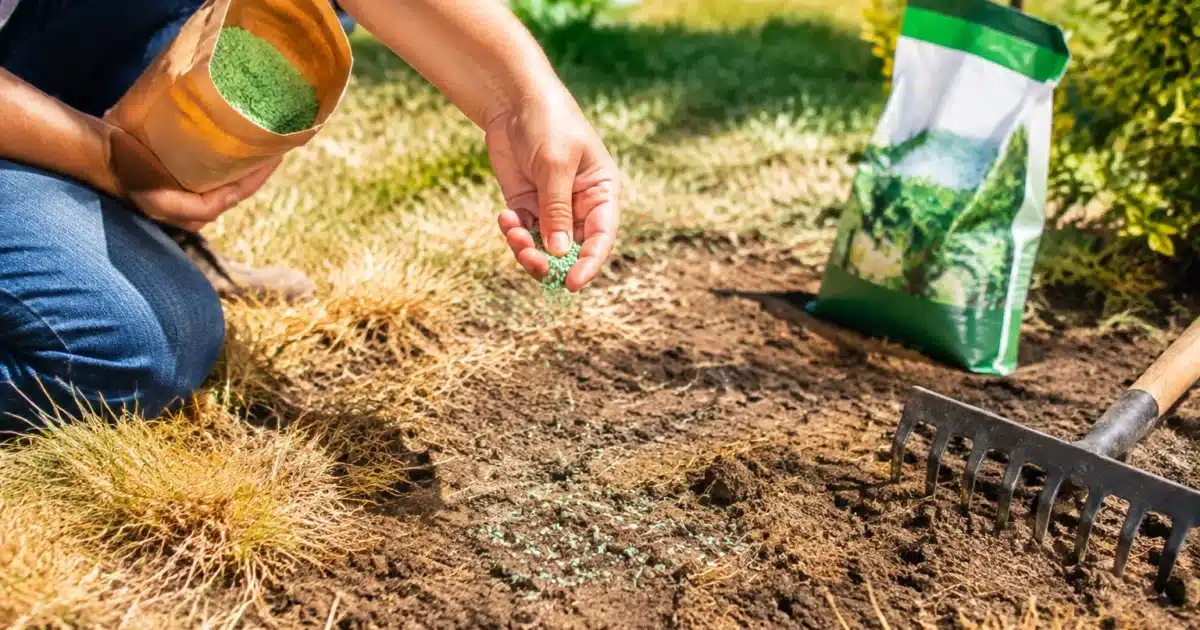
Once the soil is aerated and rehydrated, it’s time for overseeding. Patching involves spreading new grass seed over areas where nothing regrows, mixing it lightly into the existing soil with a simple rake. September remains the best window of the year for this job (soil is still warm, rain naturally returns, and young shoots have time to root before the first freeze), provided you hit the right timing for reseeding a heat-scorched lawn after a heatwave.
Choose grass seed suited to your soil type and garden exposure, rather than a generic blend. A light dose of phosphorus-rich fertilizer, which promotes root development, can accompany seeding, but avoid any high-nitrogen fertilizer that would push leaf growth at the expense of roots when the lawn needs to anchor itself before winter, especially since plants stressed by summer don’t always need fertilizer.
Never kill
another plant.
Take a photo: the app names the species, spots the problem and tells you exactly what to do.
The mistakes that ruin all this effort
Mowing too short remains the number-one pitfall after a scorched lawn: cutting too close further weakens already fragile blades and exposes bare soil to residual sun. Keep a generous cutting height, around 6 to 7 cm, until the grass regains its vigor.
Another common mistake: dethatching too early, as soon as the first signs of cool weather appear, without waiting for the lawn to actually exit dormancy. Better to wait for the color to return somewhat before intervening. Finally, heavy watering all at once encourages moss and thatch development, exactly what you’re trying to eliminate with aeration. Work through the steps in order, without skipping ahead, and your lawn will have every chance of bouncing back before cold locks everything down until spring.