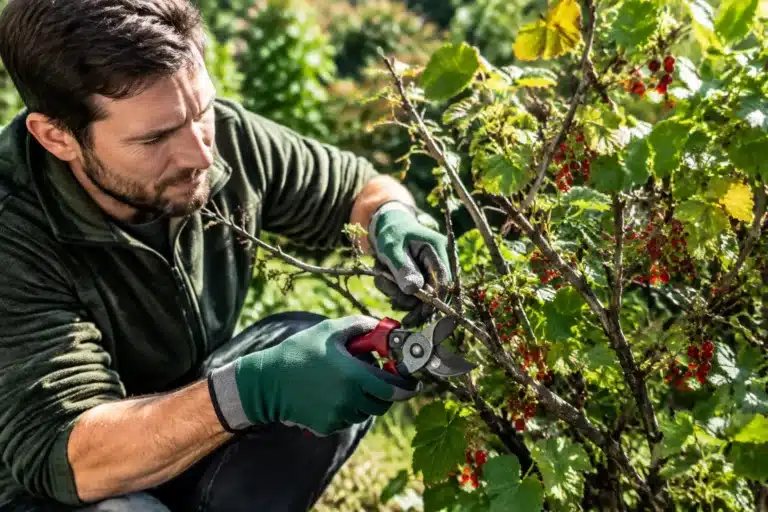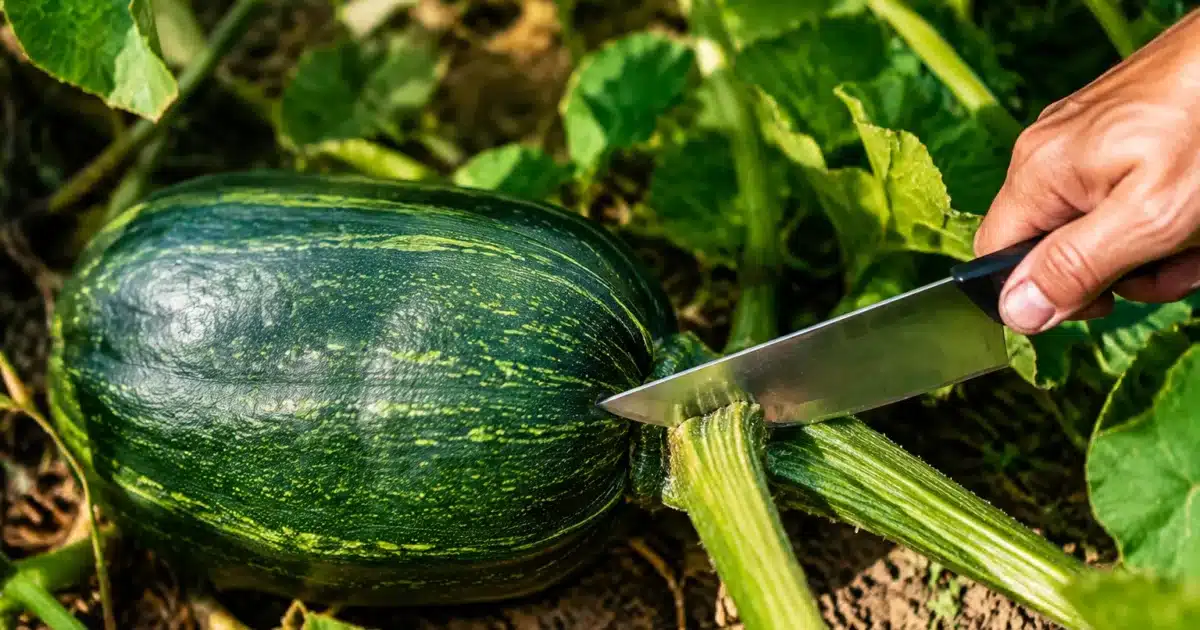
You’re harvesting your squash, pruners in hand, and you’re wondering if the gesture you’re making right now will really make a difference. The answer is yes. One detail, often overlooked, determines whether your pumpkin will be eaten in three weeks or stored until next spring.
That detail is the stem. Its length and the way you cut it determine how quickly bacteria and mold will settle on the fruit. A wrong move, and the squash rots in a few weeks. The right move, and it sails through winter without a hitch.
Why This Detail Changes Everything: The Stem, Key to Storage
The stem is not just a decorative stalk on top of the squash. It plays the role of natural barrier against bacteria and mold that seek to infiltrate the attachment point. As long as it remains intact and sufficiently long, it blocks access to these microorganisms responsible for decay.
Conversely, a torn-off, broken, or too-short stem leaves an open scar. This wound becomes an ideal entry point for moisture and fungi. Result: the squash begins to mold from the inside, often without any visible signs on the outside for weeks.
The Right Technique at Harvest: Cut With Pruners, Never Pull
Harvesting should always be done with pruners, never by hand. Pulling or twisting the stem to detach the fruit causes an irregular tear, far more vulnerable than a clean cut. Pruners allow for a clean section without crushing the fibers, which promotes better healing.
This simple gesture takes two seconds but directly influences storage duration. A clean wound dries faster and forms a more effective natural barrier than a fibrous tear that stays damp longer.
Ideal Stem Length (3 to 5 cm)
The length of stem to retain should be between 3 and 5 centimeters. Below that, protection is insufficient and the attachment point remains exposed. Above that, it’s not problematic per se, but it adds nothing: the key is never to cut flush with the fruit.
Many amateur gardeners cut too close for aesthetic reasons or to save storage space. This is precisely the habit that explains why some squash keep barely three weeks while others last six months.
The Mistake That Costs Months of Storage
Never kill
another plant.
Take a photo: the app names the species, spots the problem and tells you exactly what to do.
Cutting the stem flush so the squash “sits better” in the crate does exactly the opposite: the open wound becomes the starting point for decay. Better to sacrifice a little space than storage life.
Curing: The “Sunbathing” Step Forgotten After Cutting
Once harvested, squash should not go straight to the cellar. They need a curing stage, sometimes called sunbathing, lasting between ten and fifteen days. Laid flat, dry, sheltered from rain but exposed to light and air, they will harden their skin.
This curing period completes the work of the stem. It allows the cut wound to dry completely and the rind to thicken, further strengthening protection against moisture and future external threats. Without this step, even a well-cut stem isn’t always enough to guarantee long storage.
Tap to scan your plant
This feature requires the Plantalya app. Scan any plant instantly with your camera!
Optimal Storage: Temperature, Humidity, and Squash Arrangement
Once curing is complete, proper storage begins. The cellar remains the reference location, provided you maintain a temperature between 10 and 13 degrees and moderate humidity—neither too dry nor too wet. Excess humidity reignites the risk of mold, even on a well-prepared squash.
Arrangement also matters. Each squash should be placed without direct contact with the floor or concrete, ideally on a wooden rack or cardboard, stem side up. Fruits should never touch each other: simple contact can be enough to transmit mold from one squash to another.
| Variety | Average Storage Duration |
|---|---|
| Red Kuri | 3 to 4 months |
| Butternut | 4 to 5 months |
| Muscat Squash | 5 to 6 months |
| Pumpkin | up to 6 months |
These durations assume careful handling from harvest onward, much like the apple trick for ripening green tomatoes after harvest, where the post-harvest gesture makes all the difference. A squash bruised, even slightly, develops weak areas that accelerate decay, regardless of stem quality or storage conditions.
What to Do If the Stem Is Already Broken or Missing
Never kill
another plant.
Take a photo: the app names the species, spots the problem and tells you exactly what to do.
It happens that a squash falls on its own or the stem breaks despite your precautions. In that case, long-term storage isn’t possible: the natural barrier no longer exists, and decay risk spikes strongly from the first few weeks. These fruits should be eaten first, before the others.
There’s no point trying to “repair” a broken stem or cover it up. Better to enjoy these squash quickly in the kitchen rather than risk watching them mold in a corner of the cellar, in contact with well-preserved fruits.
This stem detail, small as it may seem, ultimately sums up the entire logic of squash storage: a well-sealed wound protects, an open wound exposes. Between three weeks and six months of storage, the difference often comes down to these few centimeters of stem left behind when cutting.