

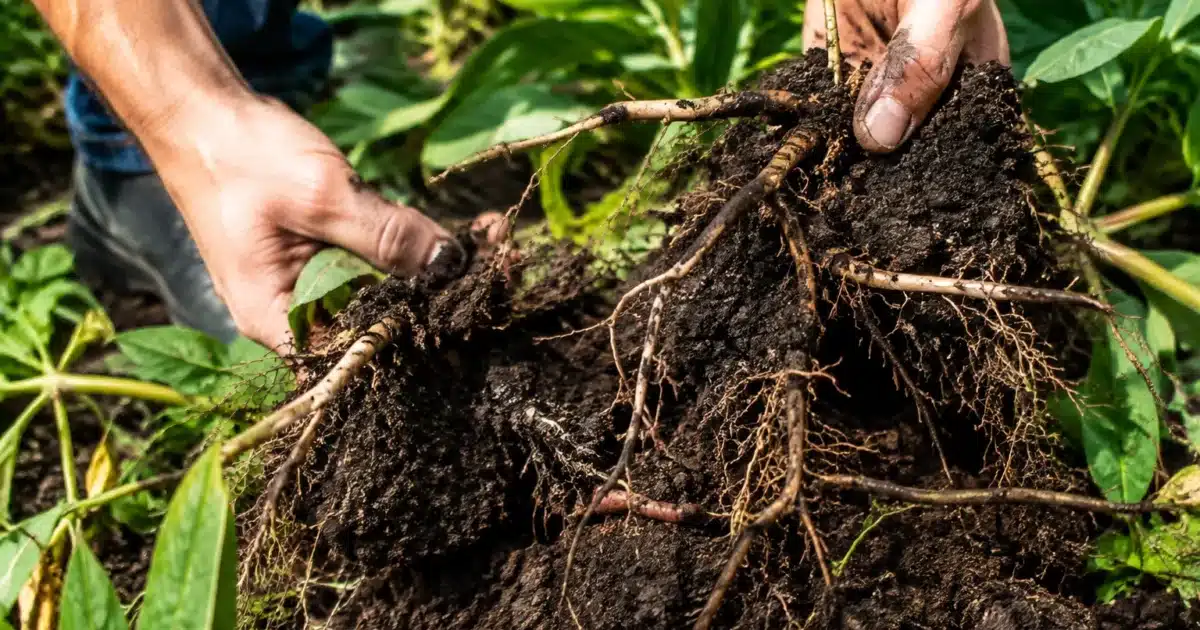
Every autumn, the same instinct returns: you yank out the old tomato plants, shake the soil off, fill the wheelbarrow until the vegetable garden looks like a blank, clean slate, when in fact leaving the tomato patch empty until spring is actually a mistake. This gesture feels reassuring, but it’s not always justified. In many cases, leaving the roots in place does the soil far more good than you might imagine.
The answer fits in one sentence: cutting the stems at ground level and letting the roots decompose in place is often preferable to complete removal, except on clay soil or when disease is present. The rest of this article explains why, and how to adapt the method based on your soil type.
Why we used to pull everything out: the “clean garden” reflex
The habit of a tidy vegetable garden at season’s end comes from a culture of neatness inherited from community gardens and advice passed down through generations. A square of bare earth, cleared of all vegetation, gave the impression of work well done and soil ready for winter. This reflex took root without always considering what happens beneath the surface.
Systematic removal also means pulling out everything the plant has built over months: a network of roots that has dug tunnels, nourished fungi and bacteria, and stabilized the surrounding soil. By pulling at once, you destroy this invisible architecture purely for aesthetic benefit.
Leaving roots in place: concrete benefits for your soil
Once the above-ground part is cut, the root left in the earth becomes a resource rather than waste. It will feed soil life for weeks, sometimes months, before disappearing entirely.
Natural enrichment with organic matter
A decomposing root gradually releases organic matter right where future crops will need it. It’s free input, with no wheelbarrow or transport required, that feeds the microorganisms responsible for fertility—a principle much like this plant that freely nourishes the earth when the garden empties. The roots of tomato plants, squashes, or beans often represent dozens of grams of living matter per plant, which eventually transforms into humus.
Preserved soil structure and active underground life
As they decompose, roots leave behind tiny tunnels that naturally aerate the soil and improve water circulation. This network directly benefits soil structure, especially at depth, where the spade doesn’t always reach. Earthworms, mycorrhizal fungi, and bacteria settle along these passages: decomposition keeps a biological chain working for you, even through winter.
Pulling at once breaks this network and causes soil disruption that often isn’t necessary. Earth compacts faster, tunnels close back up, and it takes several seasons to regain such a favorable structure.
The classic mistake after harvesting tomatoes
Never kill
another plant.
Take a photo: the app names the species, spots the problem and tells you exactly what to do.
Giving a sharp pull on a tomato plant often uproots 15 to 20 cm of shallow roots but snaps off the central taproot that went deeper. Result: you damage the soil for an incomplete job. Cutting at soil level with pruners avoids this wasted effort and lets the taproot decompose peacefully.
Pull or leave: it all depends on your soil type
There’s no single rule that works everywhere. How soil handles a decomposing root varies greatly with its texture, and this is often where the right decision gets made.
Clay soil: pulling cleanly is often still preferable
On heavy, compact clay soil, a slowly rotting root can create pockets of stagnant moisture unfavorable to subsequent crops. This soil type already warms reluctantly in spring, and accumulated decomposing matter at the surface slows the process further. In this context, pulling larger roots and composting them separately remains the safer option, while leaving fine roots to decompose in place.
Tap to scan your plant
This feature requires the Plantalya app. Scan any plant instantly with your camera!
Sandy or light soil: roots can stay without worry
Sandy or light soil drains quickly and often lacks organic matter. Here, leaving roots in place is almost always a good idea: they bring exactly what’s missing, without risk of excess moisture. Decomposition is also faster thanks to better air circulation, which encourages dense soil life within weeks of cutting.
| Soil type | Roots: pull or leave | Why |
|---|---|---|
| Clay | Pull large roots | Risk of stagnant moisture |
| Sandy / light | Leave in place | Natural lack of organic matter |
| Balanced living soil | Cut at ground level, let decompose | Sustains soil life without excess |
The right method: cutting low rather than pulling hard
In most cases, the simplest solution is also the most effective for soil health. Take pruners or a small garden saw, cut the stem just above ground level, and leave the root in the earth. This gesture avoids the soil disruption that comes with aggressive pulling and respects the work the plant has already done during its growth.
This method fits a sustainable gardening philosophy, close to permaculture principles, where the goal is to minimize heavy soil intervention. It also demands far less physical effort than complete removal, which matters when you’re at the garden’s end-of-season pace and time grows short in autumn.
There is one exception to keep in mind: plants visibly affected by disease, hit by blight or other fungal infections, must be removed entirely, roots and all, and taken away from the garden. Leaving contaminated roots in the soil would be preserving a disease source for next season.
Never kill
another plant.
Take a photo: the app names the species, spots the problem and tells you exactly what to do.
What to do with the above-ground parts and removed plants?
Once stems are cut, they easily go to the compost if healthy, or as direct mulch on already-empty beds. This mulch protects the soil surface through winter, limits rain leaching, and continues to add organic matter at the surface (much like a handful of fallen leaves to feed the earth), complementing what decomposes below.
Diseased plants should never go into regular home compost, since the temperatures reached aren’t always high enough to destroy spores. Better to send them off with collected green waste to a recycling center, where industrial composting achieves reliably higher temperatures.
Ultimately, the question isn’t whether to always pull or never pull, but to observe your soil and crops before deciding. A vegetable garden that keeps part of its roots through winter isn’t poorly maintained: it’s often a soil that continues working, quietly, waiting for spring.


