You stand before your potted plants, watering can in hand, hesitating each time and unsure whether you should watch for signs that indicate you should reduce watering. The soil looks dry on the surface, but what about underneath? A simple soil test tells you whether your potted plants really need water, without guessing or following a rigid schedule.
The quickest method remains the finger test: it takes five seconds and prevents half of the watering mistakes made on indoor plants.
The Finger Test: The Quick Method to Check Soil Moisture
How to Perform the Finger Test in 5 Seconds
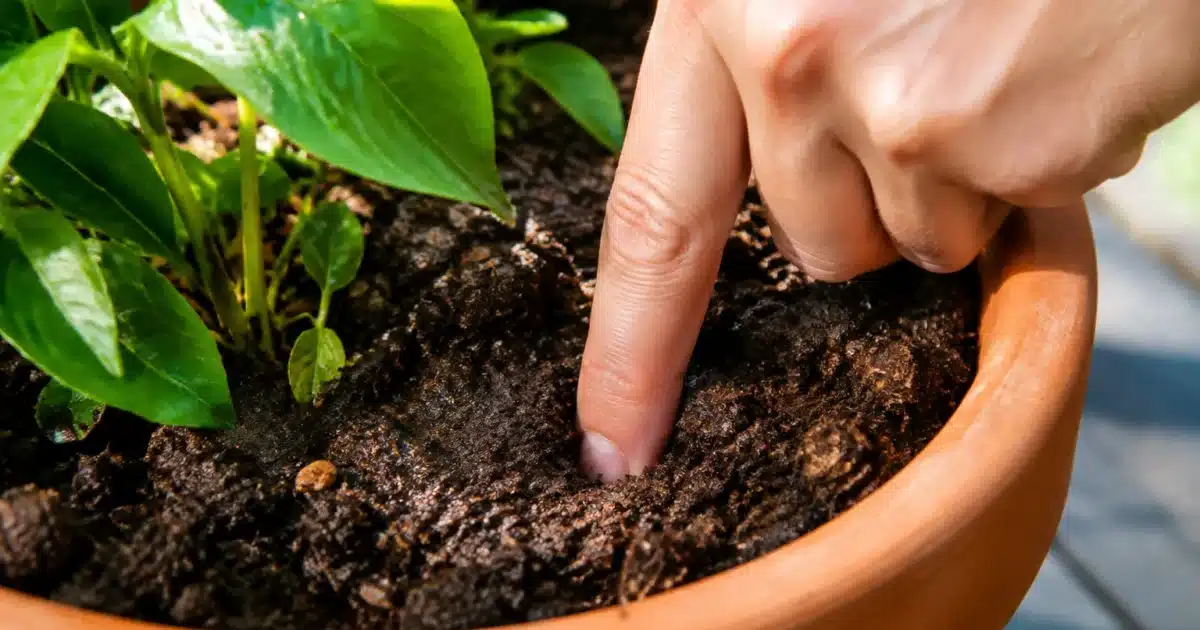
Push your index finger into the soil up to the second knuckle, about three to four centimeters deep. A pot’s surface may seem dry while the roots are still sitting in moisture below. This is precisely the difference between the top and bottom of the pot that misleads most people.
Symptom Checker
Check the symptoms you observe on your plant:
Interpreting the Result: Dry, Moist, or Soggy
If soil sticks to your finger and leaves wet residue, the plant doesn’t need water. If the soil feels slightly cool to the touch without sticking, it’s the ideal time to water moderately. If your finger comes out completely clean and the soil crumbles apart, watering is needed right away, especially during the growing season.
Never kill
another plant.
Take a photo: the app names the species, spots the problem and tells you exactly what to do.
The Wooden Stick Test: The Foolproof Trick for Large Pots
For deep pots where your finger won’t reach the roots, a wooden stick or a wooden spoon works perfectly. Push it to the bottom of the container, leave it in place for a minute, then pull it out. If it comes out with moist soil clinging to it, wait a bit longer. If it comes out clean and dry, it’s time to water. This technique, borrowed from professional gardeners, works like a cake tester used in cooking to check doneness.
The Classic Mistake with Succulents
On a cactus or succulent, soil on the surface can stay dry for weeks without problem. Relying on this appearance to water leads straight to overwatering, the leading cause of death for these potted varieties.
Other Simple Methods to Tell If Your Plants Are Thirsty
Tap to scan your plant
This feature requires the Plantalya app. Scan any plant instantly with your camera!
Scan Your Plant — Download Free AppLift the Pot to Assess Its Weight
A pot of well-hydrated soil weighs noticeably heavier than a dried-out pot. Get in the habit of lifting your pots right after a full watering, then a few days later: the weight difference quickly becomes a reliable reflex, almost instinctive, to judge moisture level without even touching the soil.
Observe the Soil’s Surface Appearance
Dry soil cracks, shrinks slightly away from the pot edges, and takes on a lighter shade. Well-hydrated soil keeps a dark color and supple texture. This visual clue complements the finger test, especially when managing several plants and wanting to move quickly.
| Method | Best for | Reliability |
|---|---|---|
| Finger test | Small to medium pots | Very good |
| Wooden stick | Deep pots | Excellent |
| Pot weight | Comparison over time | Good |
| Moisture meter | Large collections | Very good |
For those with a large collection of indoor plants, a moisture meter inserted into the soil provides continuous numerical readings. It’s not essential, but it reassures beginner gardeners who still doubt their judgment.
Recognizing Signs of Improper Watering
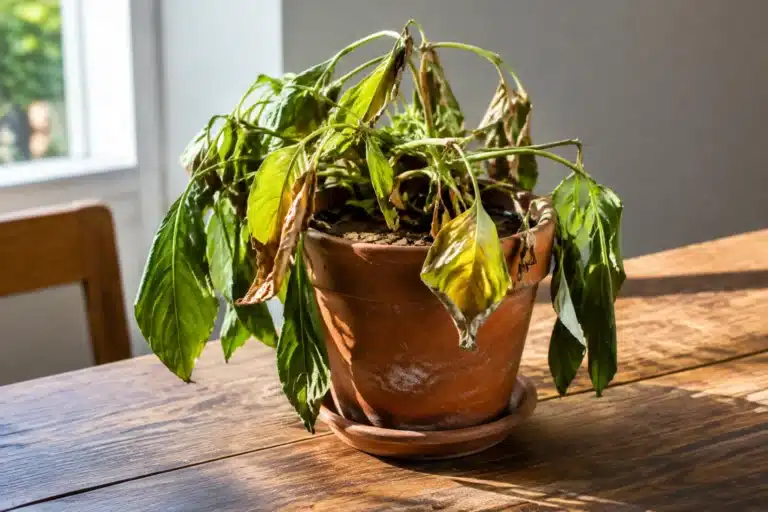
Drooping and soft leaves often signal lack of water, with the plant drawing on reserves to survive. But beware: yellowed leaves and limp foliage can also reveal overwatering, when roots sit too long in waterlogged soil and suffocate from lack of oxygen. Drainage plays a decisive role here: a pot without drainage holes or overly compact soil promotes root rot, even with reasonable watering.
Never kill
another plant.
Take a photo: the app names the species, spots the problem and tells you exactly what to do.
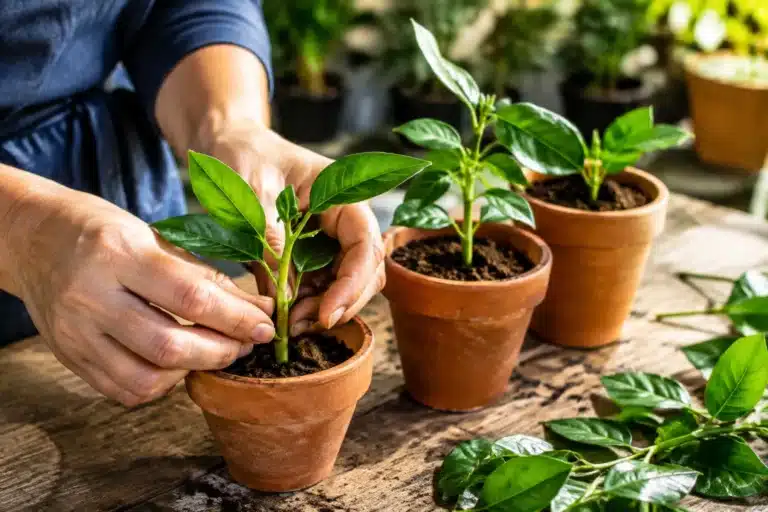
Faced with yellowed leaves, always check the soil’s condition before concluding. Underwatering corrects itself within a few days of regular watering, while advanced overwatering with blackened, mushy roots sometimes requires complete repotting in fresh, well-draining soil.
Adjust Watering Based on Season and Plant Variety
Water needs change drastically between summer and winter. During the growing season, soil dries faster and requires more frequent checks. In winter, most plants slow their metabolism and can tolerate, even prefer, longer stretches between waterings (a principle similar to the watering mistake that kills certain plants in late August).
Plant variety matters just as much as season. A fern enjoys constantly moist soil, while pothos or ficus tolerates complete drying between waterings. The finger test remains the common starting point, but the watering frequency that follows should always account for these characteristics specific to each plant.