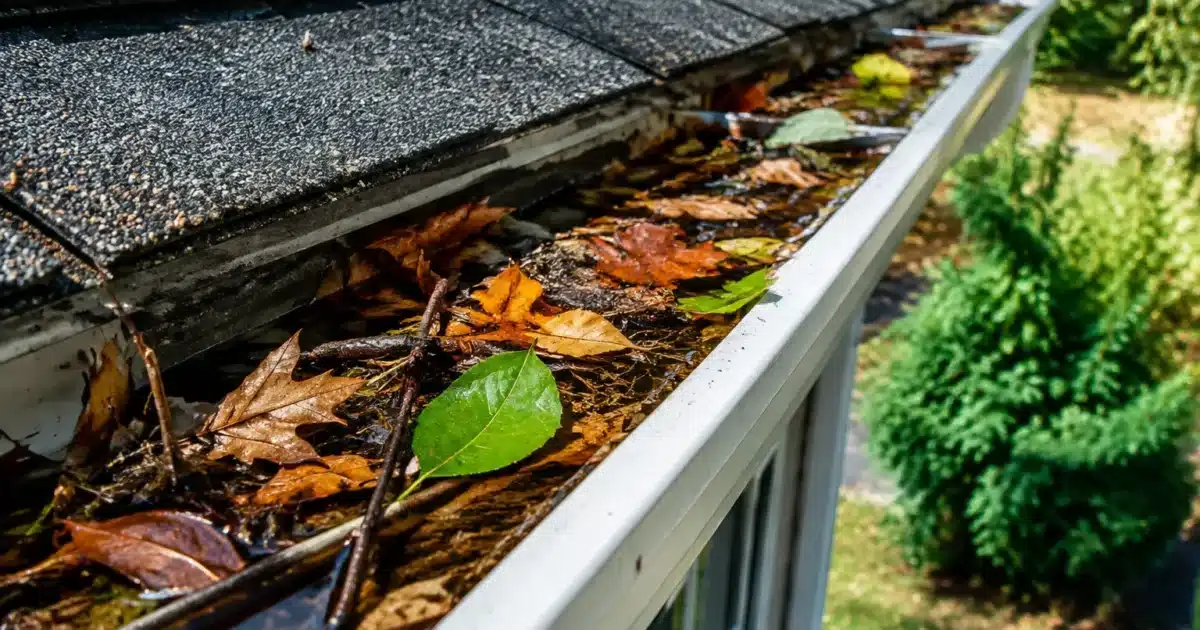
The sound of water trickling down a wall, a persistent puddle near the foundation, a gutter hanging slightly loose. These details may seem minor, much like these mistakes that let moisture into your home when the first rains return. Yet they often signal clogged gutters, and the problem worsens quickly once the rainy season arrives.
Four signs can help you spot the problem before it causes serious damage: water overflowing during a downpour, sagging or deformation of the system, vegetation growing in the channels, and water stains or erosion at the base of walls. If you notice even one of these signs, cleaning is essential before autumn or winter.
Why monitor your gutters before heavy rains
Gutters and downspouts are designed to drain rainwater away from your roof and foundations. When they become clogged with leaves, moss, or debris, water has nowhere to go. It pools, overflows, seeps under tiles, or runs down the facade.
The consequences are never purely cosmetic. A blocked gutter over several weeks can cause roof leaks, weaken the facade, and eventually damage your home’s foundations. Maintenance before autumn prevents most of these risks at far less cost than repairs later (a principle that also applies to checking exterior blinds before heavy rain).
Sign #1: Visible overflow during rain showers
This is the easiest signal to observe. During a moderate to heavy rain, watch your gutters from a window or the garden. If water overflows over the edge instead of flowing normally toward the downspouts, something is blocking the passage further along the channel.
This overflow is often visible at a specific spot, appearing as a curtain of water falling directly down the wall instead of following the gutter. Over time, water running down the same spot creates dark stains and keeps the facade permanently damp just below.
Sign #2: Sagging or deformed gutters
A healthy gutter stays straight and properly attached to the roof. When it starts to tilt, sag in the middle, or pull away from its fasteners, accumulated weight from dead leaves, soil, and standing water is almost always the culprit.
Never kill
another plant.
Take a photo: the app names the species, spots the problem and tells you exactly what to do.
This sagging isn’t just a cosmetic issue: a deformed gutter no longer drains water properly, which worsens leaks and speeds up wear on the fasteners. The longer the deformation persists, the greater the risk of the section breaking completely, especially under the extra weight of ice in winter.
Sign #3: Vegetation growing in your gutters
Moss, small grasses, sometimes even young tree shoots take root in poorly maintained gutters. This vegetation needs a mix of soil and decomposing leaves to establish itself, which means a real organic blockage has already formed.
This is common in autumn when leaves accumulate in large quantities, but it can happen year-round beneath trees. Once vegetation is visible from the ground, the obstruction is usually well advanced and a simple rinse with water won’t be enough to clear it.
Tap to scan your plant
This feature requires the Plantalya app. Scan any plant instantly with your camera!
Sign #4: Water stains, marks, or erosion at the base of walls
The final sign appears at ground level, not on the roof. Vertical water streaks on the facade, dark halos near the foundations, or visible erosion in flower beds directly below a downspout indicate that water has stopped following its normal path some time ago.
This gradual erosion weakens the soil around your foundations and can eventually lead to basement or cellar leaks. These clues are often overlooked because they appear far from the gutters themselves, when in fact they’re a direct consequence of gutter problems.
How often to clean based on your surroundings
A home surrounded by trees needs maintenance twice a year, ideally in spring and just before autumn. Without nearby vegetation, annual cleaning before the rainy season is usually enough to avoid nasty surprises.
Never kill
another plant.
Take a photo: the app names the species, spots the problem and tells you exactly what to do.
What to do once you spot these signs?
The first step is to manually remove accumulated leaves and debris using a trowel or appropriate gloves, then rinse the entire channel with a garden hose to check that water flows properly to the downspouts. This work should always be done from a stable ladder, never from the roof itself.
If sagging is already pronounced, if fasteners are rusted, or if your home has multiple stories, calling a roofer or gutter cleaning professional remains the safest solution, much like the 5 checks to make before restarting your heating. They can also assess the overall roof condition and spot any hidden leaks invisible from ground level.
Regular maintenance performed before heavy rains return costs far less than roof or facade repairs made necessary by months of standing water. Careful attention to these four signs twice a year is all it takes to keep your gutters functioning and your home protected through autumn and winter.