Your thyme plants are starting to look tired and you’re already thinking you’ll need to buy mint again next year? Not so fast. This time of year, between late summer and early fall, remains ideal for multiplying your favorite aromatic herbs without spending a cent next spring.
The answer lies in five easy-to-work perennial plants: thyme, mint, chives, oregano, and rosemary or sage. Each one lends itself to a specific propagation technique, whether division or cuttings, which can be accomplished in just a few minutes with a clean knife and some small pots.
Why Now Is Still the Perfect Time to Propagate Your Aromatics
In September, the heat drops but the soil remains warm. Roots take advantage of this balance to establish themselves before winter, without the stress of extreme heat or the threat of frost still far off. This is exactly the window you need to succeed at dividing perennials or taking cuttings from Mediterranean aromatic plants like thyme or rosemary.
Waiting until spring to propagate often means missing this quiet rooting window. Young plants then have to face summer drought without having had time to develop a strong root system. By acting now, you’re giving your cuttings and divisions several months to take root before growth picks up again.
The 5 Aromatic Plants to Propagate Right Now
Thyme: Express Cuttings in Late Summer
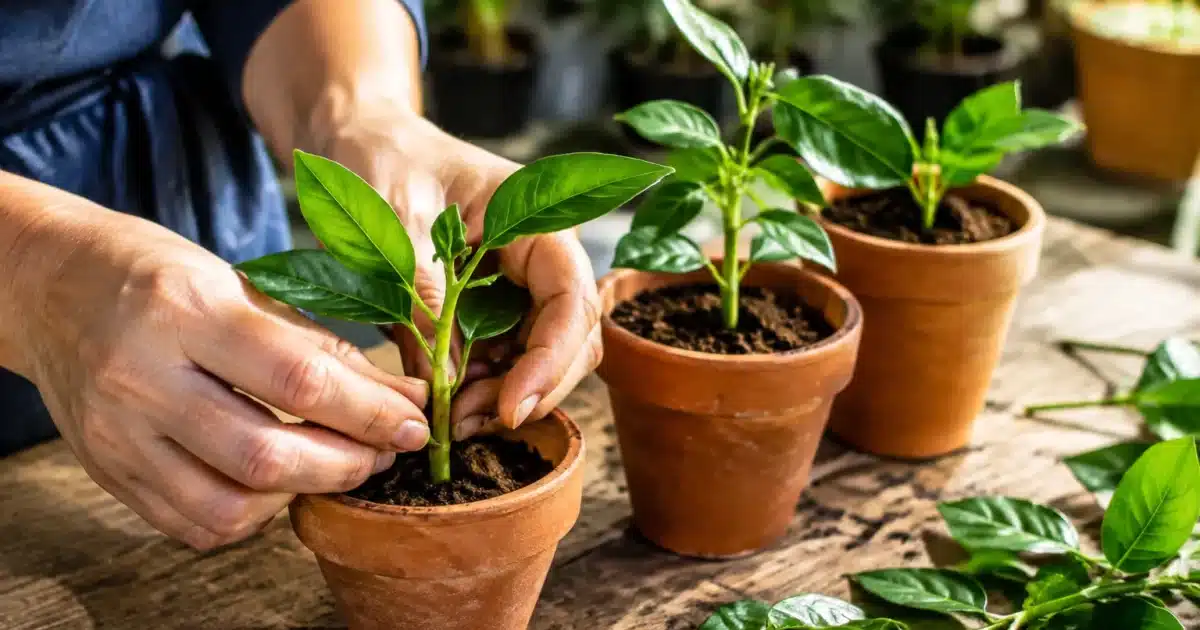
Thyme propagates easily by semi-woody stem cuttings, a technique detailed among the 10 plants easy to propagate after summer to fill your garden for free. Take shoots 8 to 10 centimeters long, remove the lower leaves, then plant them in a mix of potting soil and sand. Keep the substrate slightly moist without excess: rooting usually takes three to four weeks.
Mint: Division to Curb Its Spread
Mint colonizes the garden quickly thanks to its spreading rhizomes, making it a perfect candidate for division. Dig up a clump, separate the divisions by hand while keeping some roots on each, then replant them in pots or directly in the garden. This is also an opportunity to limit its expansion while creating new free plants.
Never kill
another plant.
Take a photo: the app names the species, spots the problem and tells you exactly what to do.
Chives: The Ultra-Simple Division That Triples Your Plants
Remove the chives root ball and separate it into three or four divisions by hand, without any special tools. Each small cluster of bulbs will grow back immediately in a pot or directly in the garden. Within a few weeks, you’ll have several distinct plants where there was only one.
Oregano: Division or Cuttings for Endless Supply
Oregano tolerates both methods depending on the shape of your mother plant. If the clump is compact, divide it like chives. If it’s more spreading, take non-flowering stems for classic cuttings in well-draining substrate, away from direct sun during rooting.
Rosemary or Sage: Cuttings That Thrive All Winter
These two Mediterranean aromatic plants appreciate cuttings taken from semi-mature wood, meaning stems that are neither too tender nor completely woody. Placed in pots indoors or in a cold frame, they survive winter well and resume growth as soon as the first warm days arrive.
Tap to scan your plant
This feature requires the Plantalya app. Scan any plant instantly with your camera!
Scan Your Plant — Download Free AppThe Mistake That Kills Cuttings
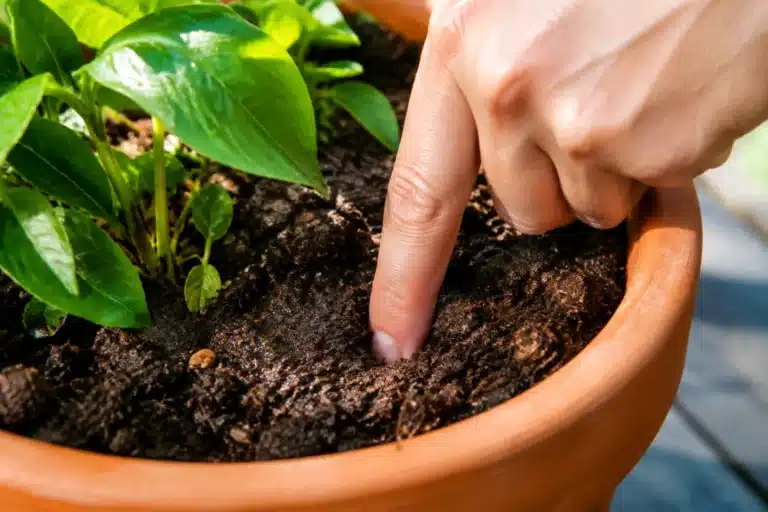
Many gardeners overwater after planting. A waterlogged substrate causes the stem to rot before roots even appear. Light, regular watering is better than occasional excess.
Technical Steps for Successful Propagation
Never kill
another plant.
Take a photo: the app names the species, spots the problem and tells you exactly what to do.
Division in 3 Steps
Like with the 6 plants to divide now to get dozens of new specimens without spending a euro, start by gently digging up the entire plant with a spade fork, preserving as many roots as possible. Next, separate the root ball into several divisions by hand or with a knife, each needing both roots and a few leafy stems. Replant each division immediately in a pot or directly in the garden, then water thoroughly once to settle the soil around the roots.
Cuttings Step by Step
| Step | Action |
|---|---|
| 1. Harvesting | Cut a healthy stem 8 to 12 cm long, without flowers |
| 2. Preparation | Remove leaves from the bottom third of the stem |
| 3. Planting | Insert the stem into moist potting soil and sand mixture |
| 4. Patience | Wait 3 to 5 weeks for new roots to appear |
Care and Potting On for Spring-Ready Plants
Once your cuttings have rooted and your divisions have established, keep them cool but frost-protected over winter: an unheated sunroom, a cold frame, or a bright windowsill works perfectly. Check substrate moisture every two weeks without ever waterlogging it.
Once temperatures rise in spring, proceed to potting on in the garden or into larger permanent containers. Young plants from division often get off to a faster start than those from cuttings, as they already have an established root system. Either way, you’ll arrive at the growing season with robust plants ready for harvest, without spending a euro at the garden center.